
Fintech is one of the fastest-growing sectors in digital advertising and one of the hardest to get right. You are asking people to trust you with their money. That trust starts with the very first ad impression.
The good news is data is clear. Finance and insurance display ads convert at 1.19% CVR, outperforming most other industries and proving that well-crafted ads can overcome even deep financial skepticism. Dynamic fintech display ads achieve a 0.76% CTR, 117% higher than static ads. With U.S. digital ad spend growing 9.5% in 2026, competition for fintech attention is only getting more expensive.
This post breaks down what makes fintech display advertising work with real brand examples, best practices, the mistakes that kill performance, and a practical guide to building compliant, on-brand fintech ads at scale.
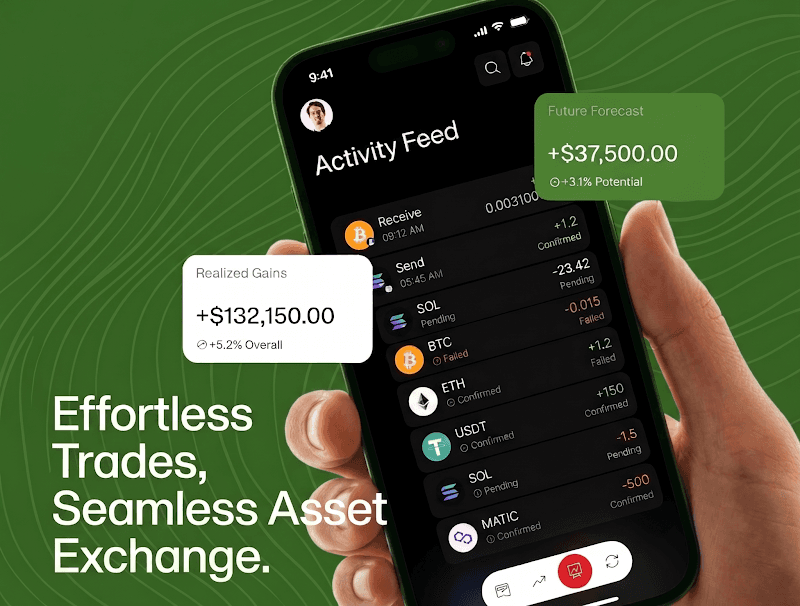
The case for display. Why display advertising works for fintech
Financial decisions are not made in a single moment. Whether someone is evaluating a new savings account, comparing cryptocurrency platforms, or considering a buy-now-pay-later service, the journey involves research, comparison, and second-guessing. Display ads are built for that evaluation window — they keep your brand visible across every site a prospect visits while they deliberate.
Trust compounds over time. The more consistently a user sees your brand in clean, professional placements, the more credible you feel by the time they act. In fintech, the barrier to conversion is not just preference — it is risk perception. Choosing the wrong bank feels consequential in a way that choosing the wrong pair of shoes does not.
Retargeting warm audiences achieves 2–3x higher conversion rates than cold prospecting. Someone who started a loan application but didn't finish it should see 'Complete Your Application. Takes 2 Minutes', not a generic brand awareness message.
Display advertising also offers a regulatory-friendly channel for brand-building that sits comfortably alongside compliance requirements — something that more aggressive social formats cannot always claim. For an in-depth look at how financial brands are adapting their creative workflows, see financial services marketing automation.
5 types of fintech display ads that actually perform
1. Product launch and feature highlight ads
These ads introduce a new feature or product to a broad audience. The key is radical simplicity: one feature, one benefit, one action. Coinbase has done this well by distilling the complexity of cryptocurrency adoption into clean platform walkthrough ads, showing new users exactly how easy it is to get started, step by step.
Use animation strategically here. An HTML5 banner that cycles through three frames - "Open account → Deposit → Start investing" - communicates a complete product flow in under five seconds without requiring a single line of copy. This is where a display ad creator with full animation capability pays off immediately: you can demonstrate product flows that a static image simply cannot convey.
Design should signal the future of finance, not traditional banking. Modern sans-serif typography, high-contrast color palettes, and minimal copy. If your brand requires a rate disclaimer, keep it in the footer and let the headline breathe.
2. Social proof and trust-building ads
Trust is the number-one conversion barrier in fintech. Ads that dismantle it early — before the user ever lands on your site — dramatically improve downstream conversion rates.
Effective trust signals in fintech display ads: user counts ("Join 10M+ Users"), app store ratings displayed as star graphics, security certifications (SOC 2, ISO 27001), regulatory badges (FDIC Insured, SEC Registered), and partner logos from recognized institutions. These signals work because they transfer credibility from established authorities to your brand.
Cleo, the AI budgeting app, built its brand on a different kind of trust: relatability. Rather than institutional credibility signals, Cleo uses informal, user-centric messaging to connect with millennials who feel alienated by traditional financial language. The lesson: trust does not always mean formal. It means relevant and authentic for your specific audience.
3. Educational and financial literacy ads
"How Does Compound Interest Work?" is a more powerful fintech ad headline than "Open a Savings Account Today." Educational ads position your brand as a helpful authority during the awareness phase when users are still forming their financial opinions and brand preferences.
Acorns, the micro-investing platform, made educational content a cornerstone of its advertising strategy — using short explainer video ads to demystify investing for people who believe it is not for them. The format works because it addresses the real obstacle: not finding the right app, but believing that investing is accessible at all.
For display specifically: headlines like "5 Ways to Build Your Credit Score" or "What's Your Money Actually Doing?" paired with a soft CTA to read a guide or take a quiz. These generate high-quality top-of-funnel traffic from users in learning mode — who will remember your brand when they are ready to act.
4. Promotional and incentive ads
When you have a concrete offer, lead with it. "$100 Welcome Bonus," "0% Fees for 6 Months," "Earn 4.5% APY" - these are the headlines that stop scrolling. The specificity is the point: fintech users are analytical, and a precise number signals honesty in a way that vague superlatives never can.
Klarna has mastered promotional display advertising by pairing clean modern visuals with a crystalline value proposition - "Buy Now, Pay Later" - that requires zero explanation. The carousel format lets Klarna show multiple merchant partners or product scenarios in a single ad unit, multiplying relevance without multiplying creative spend.
Time-limited urgency amplifies these ads. "Offer Ends March 31" or "Limited to First 1,000 Signups" creates genuine motivation to act. Just ensure the urgency is real, a perpetual "limited time" offer trains users to ignore it.
5. Retargeting and abandoned sign-up recovery ads
These are the highest-converting ads in any fintech marketer's arsenal. When someone has visited your site, explored your product, and left without converting, they have told you exactly what they are interested in. Dynamic retargeting ads that reference the specific product they viewed - "Still thinking about [Product Name]?" - feel personally relevant rather than generic.
For fintech specifically, retargeting ads should include a trust reminder alongside the product reference. "256-bit Encryption" or "FDIC Insured Up to $250,000" reassures the user that the hesitation they felt, usually about security or legitimacy has already been addressed. This combination of personalization and trust reinforcement is what makes retargeting deliver 2–3x higher conversion rates compared to cold-audience campaigns.
The technical foundation for this is a creative automation platform that can pull live product data and personalize ad content dynamically through CSV feeds, so a user who viewed your personal loan product sees loan-specific messaging and rates, not a generic brand message.
Fintech display ad best practices
Lead with concrete value, not abstract features. "Save $500/year on fees" outperforms "Smart banking for modern life" every time. Fintech users want to know exactly what they get. Vague aspirational copy signals you don't have a specific answer.
Build trust visually. Security badges, compliance logos (FDIC, SEC, SOC 2), and user count statistics should be visible in the creative - not buried in a landing page footer. Finance and insurance display CTRs range from 0.26% to 0.52%, with dynamic ads reaching 0.76% - trust signals earn that performance premium.
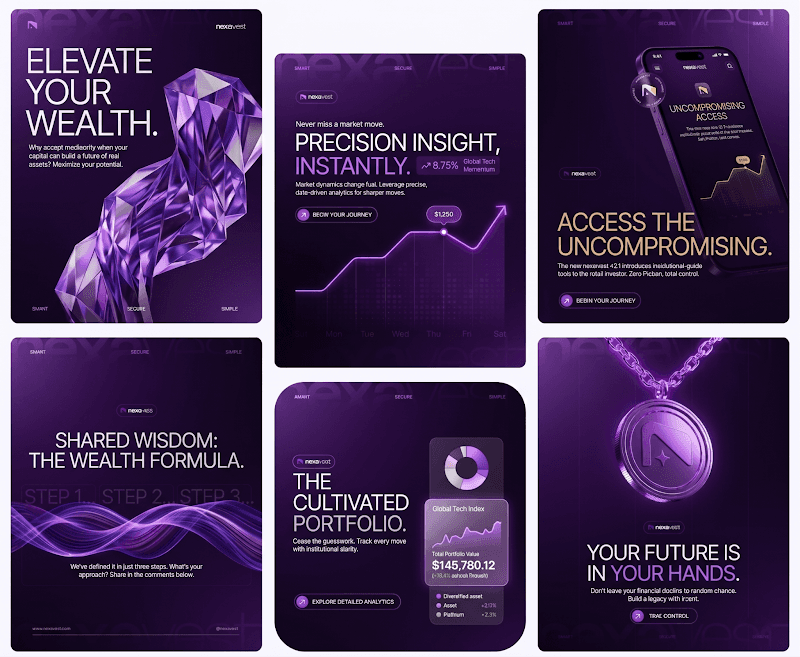
Use clean, modern design. Fintech brands should look like the future of money. White space, bold sans-serif type, and a limited color palette signal sophistication. Every design element should reinforce the message: we know what we're doing.
Handle disclaimers intelligently. Regulatory disclosures are required but they don't have to dominate your creative. Use the smallest readable type size in the banner footer, and ensure the full disclaimer lives prominently on the landing page. The ad's job is to earn the click, the landing page handles the detail.
A/B test emotional vs. rational messaging. "Finally, financial freedom" versus "Earn 4.5% APY - 10x the national average." Both work for different audiences. Use ad creative automation to run both variants simultaneously and let the data decide, not the highest-paid opinion in the room.
Segment rigorously. A crypto-experienced investor and a first-time saver require entirely different messaging and tone. Segmenting by product type, audience sophistication, and funnel stage prevents the diluted performance that comes from one-size-fits-all creative.
Use animated HTML5 to demonstrate product flows. A three-frame animation showing how an account is opened or how a transaction works can increase engagement significantly - one of the clearest ROI cases for an HTML5 banner creator over static exports.
Land what you promise. If the ad says "0% fees," the landing page must lead with that claim above the fold. Mismatches between ad promise and landing page destroy conversion rates and erode trust, both catastrophic in fintech.
What to avoid. Common fintech display ad mistakes
Overpromising returns or obscuring disclaimers. This is both a regulatory risk and a trust-killer. Honest, specific claims with visible disclosures consistently outperform vague superlatives in the long run, and keep compliance teams off your back.
Financial jargon that alienates mainstream users. "APR optimization" or "liquidity management solutions" means nothing to the average user. Write for clarity. The goal of fintech display advertising is to bring more people into financial products, not to signal exclusivity.
Ignoring mobile-first design. Most fintech users are mobile-native. Design every ad for a 320px screen first, then adapt for desktop. Text must be readable at thumb-scroll speed, CTAs must be finger-tap sized, and animations must work without audio.
Running the same creative for prospects and existing users. These audiences have completely different needs. Prospects need trust signals and value propositions. Existing users need upsell messaging and new feature announcements. One creative cannot serve both.
Neglecting frequency capping in retargeting. Showing the same ad 20 times in a week builds resentment, not affinity. Set caps (3–5 impressions per user per day) and rotate creative regularly.
Trying to explain everything in one ad. One ad, one message. The most common reason fintech display ads underperform is cramming too much into a 300×250 banner. Pick the single most compelling thing you can say to your target segment and say it clearly.
Building at scale. How to build fintech display ads at scale with Viewst
Fintech marketing teams face a specific creative production challenge: high volume, tight compliance requirements, multiple products, and rapid iteration as rates and offers change. This is precisely the problem that HTML5 display ad production automation was built to solve.
Viewst's HTML5 banner creator gives fintech teams professional, animation-ready templates that match modern fintech aesthetics out of the box — no design agency required to get campaigns looking polished and on-brand. Built-in collaboration and review workflows bring compliance, legal, and marketing teams into one workspace, so approval cycles that used to span email chains happen in a single platform with full version history.
Dynamic creative through CSV feeds is the engine for multi-product catalog advertising. When you have different rates for different audiences, or different products for different segments, one master creative serves hundreds of personalized variants, updating automatically when your data feed updates. This matters enormously in fintech: an outdated APY displayed in a live ad is both a conversion problem and a potential compliance issue.
Auto-resizing across all standard IAB sizes means your team produces one creative and Viewst handles the 300×250, 300×600, 728×90, 160×600, and 320×50 exports, eliminating the manual resize work that typically multiplies production time. AI-generated content variations accelerate A/B testing so you reach statistical significance faster and optimize toward top-performing messages. Direct publishing to Google Ads and Meta Ads Manager closes the loop from creation to live campaign in a single workflow.
For more on how financial brands approach display creative specifically, see our roundup of creative bank ad examples, the same principles that make bank display advertising work apply directly to fintech challengers competing for the same attention.
The brands that win lead with specificity and scale with automation
Fintech display advertising succeeds when it does two things simultaneously: communicates a concrete, compelling value proposition and builds the trust required for someone to act on it. The data is clear, dynamic fintech ads outperform static by 117%, and the sector converts at 1.19% CVR when the creative earns it.
The brands that win are the ones that lead with specificity, design for credibility, and use automation to scale what works. The brands that lose are the ones still resizing banners manually, waiting two weeks for compliance review, and running the same static creative to every audience segment simultaneously.
Ready to build fintech display ads that convert?
Professional animated HTML5 templates, built-in compliance review workflows, dynamic creative for multi-product catalogs, and automatic multi-size resizing — all in one platform.
Try Viewst free →
14-day free trial. No credit card required. Full platform access from day one.

Dasha is a content and product contributor at Viewst, focused on AI-driven creative production and modern advertising workflows. Her work explores how teams can streamline asset creation, scaling, and deployment using new technologies.
In this article
" height="11.060000000000002px" id="wzBCZ87AK" transform="translate(6.47 2.47)" width="6.590000000000003px"/></g></svg>)