
The Gap Between a Design Tool and an Ad Production Platform
Canva is one of the most successful products in the history of design software. It took something complicated and made it accessible to everyone. For social posts, presentations, and everyday brand collateral, it genuinely works.
But ad production is a different discipline. When your team needs to ship HTML5 display banners across a dozen IAB sizes, animate creatives for programmatic campaigns, maintain pixel-level brand consistency at scale, and export to ad-network specifications — a general-purpose tool stops being an asset and starts being a bottleneck.
Viewst is purpose-built for that workflow. It is not a better Canva. It is a different category of tool: a creative production engine designed specifically for advertising teams.
Quick Comparison
Capability
Viewst
Canva
HTML5 Ad Export
Yes — network-ready with click-tag support for Google Ads, DV360, and more
No — static formats only (PNG, JPG, PDF, GIF)
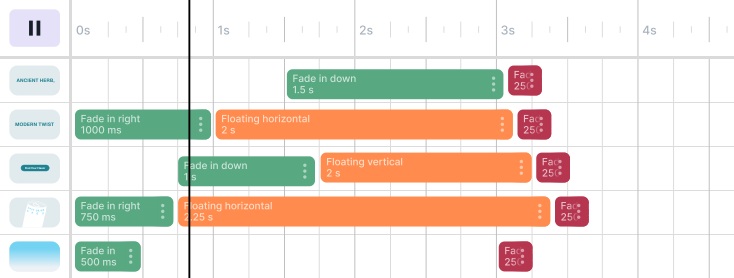
Animation Timeline
Full keyframe editor with per-layer timing control
Basic preset animations (fade, slide) only
Multi-Size Production
Create once, auto-sync to all IAB sizes simultaneously
Magic Resize — manual adjustment required per size
Feed-Based Bulk Variants
CSV and URL feed generation for unlimited data-driven variants
Bulk Create fills static templates; no HTML5 output
Ad-Network Compliance
Network-specific export packages; automatic spec validation
No ad-network packaging or compliance checking
Brand Template Governance
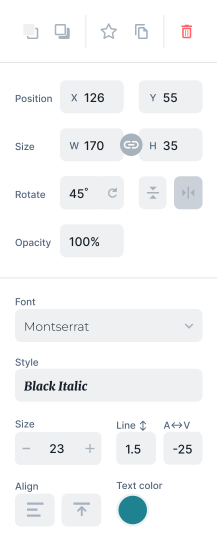
Per-layer lock and permissions — control exactly what teams can edit
Brand Kits (brand-wide settings, less granular)
Figma / PSD Import
Yes — Figma plugin, layered PDF, layered TIFF from PSD
Limited
Creative Analytics
Creative-level performance data with ad-account sync (Premium)
No creative-level ad analytics
Pricing
From $110/month per seat
From ~$10/month per seat
Where the Gap Matters Most
1. HTML5 output is not optional for display advertising
This is the most important difference on the list. Canva cannot export HTML5 banners. It exports static files. If your media plan includes programmatic display, Google Ads, DV360, or any major ad network that requires animated HTML5 creative, Canva simply cannot deliver the output you need. Viewst exports production-ready HTML5 packages with click-tag support and network-specific compliance built in, without involving a developer at any stage.
2. Canva's animations are decorative. Viewst's are professional
Canva offers preset animations — fade in, pop, slide. They look fine on Instagram. They do not meet the production standard for programmatic display advertising, where keyframe-level timing control and per-layer sequencing are expected. Viewst's animation timeline gives designers the control they need to build motion that genuinely performs.
3. Multi-size is a workflow, not a button
Canva's Magic Resize changes the canvas dimensions. Then you manually fix every element that broke in the new format. For a ten-size campaign, that process happens ten times. Viewst's multi-size sync adapts structure, spacing, and element hierarchy across all required sizes simultaneously. One master creative, every format, in seconds.
4. Feed-driven variants at production scale
Running a retail campaign with 200 product-specific variants? Canva's Bulk Create fills in text and images from a spreadsheet. It does not produce HTML5 output, and it was not built for the dynamic feed-based workflows that product catalog campaigns require. Viewst connects to CSV or URL feeds and auto-generates every variant — animated, sized, and ad-network ready.
5. Brand governance that actually holds
Canva's Brand Kits set brand-wide defaults for colors, fonts, and logos. Viewst's brand templates go further: per-layer permissions let Creative Directors control exactly which elements can be edited, moved, or replaced by downstream teams. The logo stays locked. The CTA can be changed. The background color is fixed. The headline is editable. This is the level of control that enterprise brand teams need.
Where Canva Still Makes Sense
Canva is genuinely excellent for what it was designed to do. If your team is producing social media content, presentation decks, email headers, and general marketing collateral, Canva is fast, affordable, and easy to use. Many teams use both: Canva for everyday content and Viewst as their dedicated ad production engine. They are not competitors so much as tools for different jobs.
The question to ask is simple: does your team need to produce HTML5 display ads? If yes, Canva cannot help you with that work, and no amount of workarounds will change that.