
Summary
Ethical AI in ad design means three concrete things: clients keep ownership of their creative assets and data, the tool is transparent about what its models were trained on, and the system respects user privacy and brand safety by default. Most "AI creative" tools fail on at least one of these. This guide explains what to actually check before you put a brand into an AI ad platform, and which features separate the trustworthy tools from the ones that quietly use your work to train their next model.
What "ethical AI" actually means in advertising
The phrase gets thrown around loosely, so let's pin it down. In the context of display ads and creative automation, ethical AI rests on four pillars:
Data ownership. Your designs, logos, copy, and customer data belong to your brand. The platform processes them but does not absorb them.
Training transparency. The vendor tells you whether their generative models were trained on user assets, licensed content, or public data. They do not dodge the question.
Brand safety by design. The tool gives you hard guardrails (locked logos, fonts, color palettes, copy rules) so AI suggestions cannot violate brand standards even when junior team members are using it.
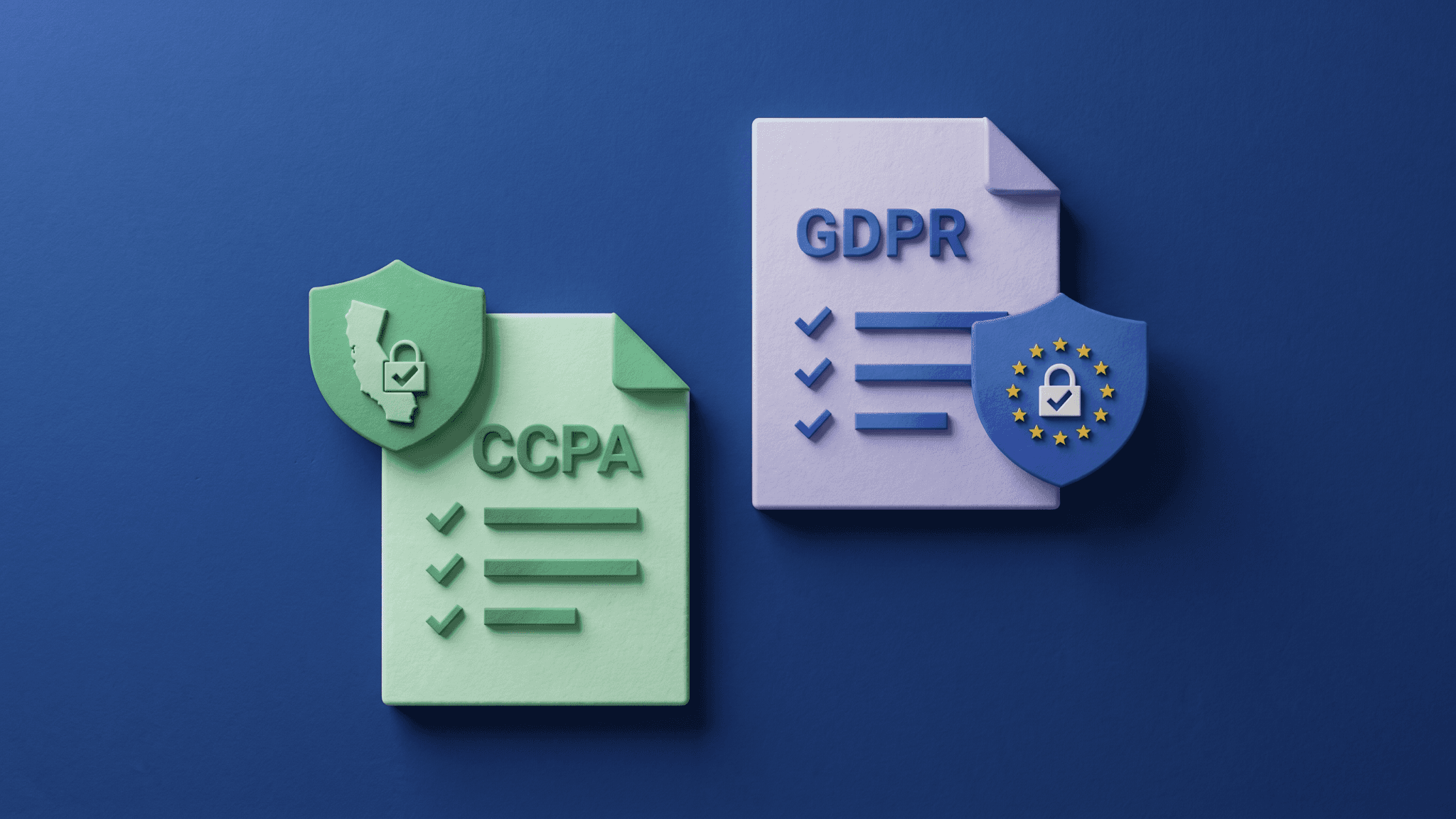
Consent and privacy. Audience data used for personalization is processed in line with GDPR, CCPA, and similar frameworks, with clear documentation a legal team can actually read.
If a tool cannot explain its position on those four points in plain English, that is the answer you needed.
The seven questions to ask any AI ad design tool before you commit
Who owns the creative assets I upload and produce?
Were your generative models trained on customer data from the platform?
Can I lock brand elements so AI suggestions cannot override them?
Where is my data stored, and what is your stance on data residency?
Do you provide an audit trail of AI-generated edits for compliance review?
What is your policy on third-party model providers?
Can I export everything and leave without losing assets?
A reputable vendor will answer all seven in writing. If you get "we'll get back to you" on more than one, keep looking.
Why this matters more in 2026 than it did in 2024
Three things changed. First, AI Act enforcement in the EU created real legal exposure for marketing teams using opaque generative tools. Second, several high-profile cases of brand assets surfacing in unrelated AI outputs made legal departments allergic to "free" AI tools. Third, consumers themselves got sharper about which brands are using AI responsibly and which are not.
The result: ethical AI moved from a nice-to-have on a compliance checklist to a procurement requirement at most mid-market and enterprise brands. Tools that cannot answer the seven questions above are getting filtered out before they even reach the trial stage.
What ethical AI looks like in practice for a creative automation platform
Here is what the responsible setup actually looks like inside a working ad production tool.
Brand guardrails are enforced, not suggested. When a designer uploads brand assets (logos, fonts, palettes), the platform treats them as locked. AI-assisted variation generation operates inside those constraints. A junior team member generating 200 banner variations for a campaign cannot accidentally produce a version with the wrong shade of red.
Asset ownership is contractual, not aspirational. The terms of service explicitly state that uploaded assets and generated outputs remain the property of the customer. The platform processes them to deliver the service and nothing else.
AI is a production assistant, not a content originator. Ethical tools use AI to scale and adapt creative that humans designed, rather than generating brand-facing creative from scratch with opaque models. The human concept stays the source of truth.
Audit and export are standard. Every change is traceable. Every asset is exportable. There is no lock-in masquerading as a feature.
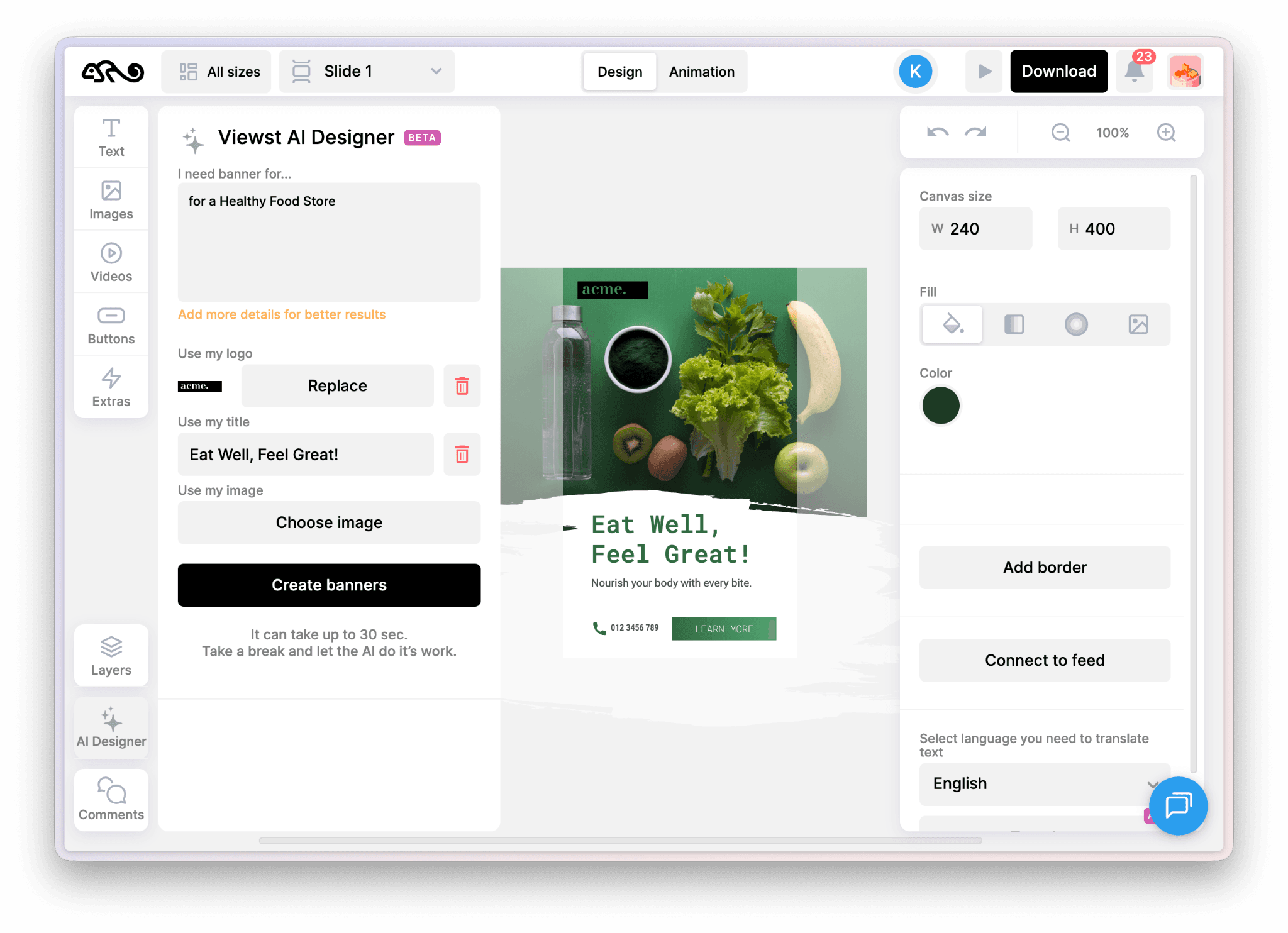
This is the approach Viewst takes. The platform is built to scale one master creative into hundreds of on-brand HTML5 ad variations, with brand elements locked, asset ownership preserved, and AI operating inside the guardrails rather than replacing the creative decision. You can start a free trial of Viewst to see how the brand-lock model works in production.
How to evaluate ethical AI claims (without taking the vendor's word for it)
Marketing copy is cheap. Look at four signals instead.
The terms of service. Read the IP clause. If you cannot find a clear statement that customer assets are not used to train models, assume they are.
The security documentation. SOC 2, ISO 27001, and GDPR documentation should be available on request. A vendor that treats this as a hassle is telling you something.
The product itself. Open a trial account. Try to break the brand guardrails. Try to generate something off-brand. If the platform lets you, it has no guardrails worth the name.
The customer list. Regulated industries (finance, healthcare, pharma) do not buy from vendors with murky data practices. If the vendor has serious enterprise customers in regulated verticals, someone's procurement team already did the work.
Frequently asked questions
Is AI in advertising inherently unethical?
No. The ethical question is about how the AI is built and deployed, not whether it exists. Used responsibly, AI removes repetitive production work and frees designers for higher-value creative thinking. Used carelessly, it leaks brand assets and undermines creative integrity.
What is the most common ethical failure in AI ad design tools?
Customer assets being used to train shared models without explicit consent. This is the issue that gets brands in trouble and the one most worth checking before signing a contract.
Are open-source AI ad tools more ethical than commercial ones?
Not automatically. Open-source means the code is transparent, but the model behind it may still be trained on questionable data. Evaluate the model and the data, not just the license.
Can a creative automation platform be ethical and still scale?
Yes. Scale comes from automating the production work (resizing, adapting, variant generation) inside locked brand rules. That kind of automation does not require training on your data. It requires good engineering.
How does Viewst handle AI ethics specifically?
Viewst is built around a brand-lock model: customers upload brand assets, those assets stay theirs, and the platform's automation operates within the guardrails the brand defines. AI is used to scale production of human-designed creative, not to generate brand-facing concepts from opaque models. Customers retain ownership of all assets and outputs.
What to do next
If you are evaluating AI ad design tools, run the seven questions through every vendor on your shortlist. Two will drop out immediately. The remaining ones are worth a trial.
You can try Viewst free to see what brand-safe creative automation looks like when ethics is built into the architecture rather than bolted on as marketing copy.

Victoria is the CEO at Viewst. She is a serial entrepreneur and startup founder. She worked in Investment Banking for 9 years as international funds sales, trader, and portfolio manager. Then she decided to switch to her own startup. In 2017 Victoria founded Profit Button (a new kind of rich media banners), the project has grown to 8 countries on 3 continents in 2 years. In 2021 she founded Viewst startup. The company now has clients from 43 countries, including the USA, Canada, England, France, Brazil, Kenya, Indonesia, etc.
In this article
" height="11.060000000000002px" id="wzBCZ87AK" transform="translate(6.47 2.47)" width="6.590000000000003px"/></g></svg>)