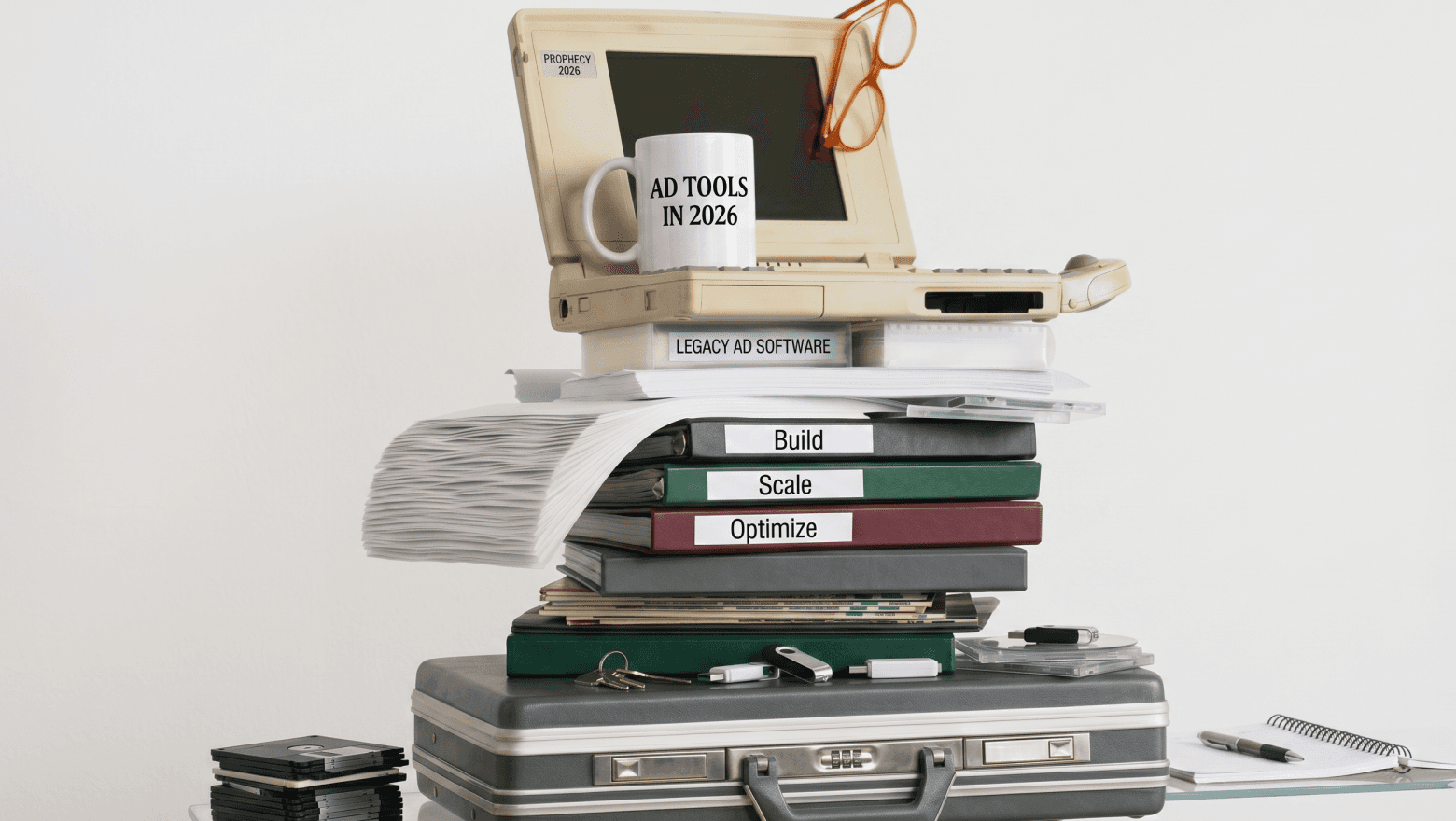
Discover the best display ad tools for 2026. Compare top platforms for creating, scaling, and optimizing display advertising campaigns with ease.
Display advertising remains one of the most powerful channels in digital marketing. In 2026, programmatic display ad spending continues to grow, with brands investing billions to reach audiences across websites, apps, and connected devices. Yet the challenge is no longer just about placement — it is about producing high-quality, on-brand creatives at the speed and scale that modern campaigns demand. A single campaign can require dozens of ad sizes, multiple language versions, and dynamic content tailored to different audience segments. The right display ad tools — often categorized as a creative management platform — can mean the difference between campaigns that convert and ones that get scrolled past without a second glance.
Manual design workflows simply cannot keep pace with the volume of creative assets that performance marketing teams need today. Whether you are running Google Display Network campaigns, retargeting across programmatic exchanges, or launching seasonal promotions in multiple markets, you need a display ad builder that eliminates bottlenecks and lets your team focus on strategy rather than repetitive production tasks.
In this guide, we compare seven of the best display ad tools available in 2026: Viewst, Bannerflow, Celtra, Creatopy, Abyssale, Zuuvi, and Smartly. We evaluate each platform across the dimensions that matter most for display advertising success — ad format support, animation capabilities, creative scaling, collaboration features, and pricing. Whether you are a small in-house team or a global agency managing campaigns for dozens of clients, this comparison will help you find the tool that fits your workflow, budget, and creative ambitions. If you are new to the space, you may also want to read our guide on how to make a banner ad before diving in.
Why the Right Display Ad Tool Matters
The era of designing a single banner ad in Photoshop and calling it a day is over. Today's display advertising campaigns span dozens of sizes — leaderboards, skyscrapers, medium rectangles, mobile interstitials, and everything in between. Add multiple languages, region-specific offers, and dynamic pricing feeds into the mix, and the volume of creative assets per campaign can balloon into the hundreds or even thousands.
Traditional design tools were never built for this level of output. Creative teams that rely on manual resizing and hand-editing each variation face crushing bottlenecks, missed deadlines, and inconsistent brand execution. That is where specialized ad creative automation platforms step in. These tools are engineered for display ad production at scale, offering features such as auto-resizing, template-based generation, dynamic content feeds, and built-in animation — all without requiring coding knowledge.
Choosing the right platform is not just a productivity decision; it directly impacts campaign performance. Faster production cycles mean more creative variations available for testing, which translates to better optimization and higher return on ad spend. The question is which tool best fits your team's specific needs.
Ad Format Support: From Static Banners to Rich Media
Display advertising encompasses a wide range of formats, and the best display ad tools need to support more than just static images. When evaluating these platforms, format versatility is a critical differentiator.
Viewst focuses on the formats that matter most for display campaigns: HTML5, static images, and animated banners in every standard IAB size. Its unlimited resize capability means you design once and generate every size you need instantly — a major time saver for teams running campaigns across multiple ad networks. For a deeper look at the format, see our guide on creating HTML5 banner ads.
Bannerflow supports display, rich media, social, video, mobile, and even digital out-of-home (DOOH) formats, making it a strong choice for agencies that run omnichannel campaigns. Celtra takes format breadth to the enterprise level with activation across more than 100 media platforms and robust rich media capabilities. Creatopy offers responsive display ads, video, and HTML5 banners backed by an extensive template library of over 5,000 designs.
Abyssale covers image, HTML5, GIF, and PDF generation — the latter being particularly useful for teams that also produce print-ready materials. Zuuvi stands out with its support for high-impact ad formats and catalogue ads alongside standard display and video. Smartly rounds out the field with its cross-channel approach, supporting display, connected TV (CTV), and social formats within a unified creative suite.
Animation and Rich Media Capabilities
Animated display ads consistently outperform static banners in click-through rates and engagement. The ability to add motion to your creatives without writing code is one of the most valuable features a display ad design tool can offer.
Viewst includes a built-in animator with ready-made presets that allow designers and non-designers alike to create smooth, professional animations without any coding. You select your elements, choose transition styles, adjust timing, and the platform handles the rest — generating clean HTML5 output that meets ad network specifications. This makes it one of the most accessible animated banner makers on the market.
Bannerflow brings in-ad video capabilities and interactive features that push into rich media territory, with support for expandable and scrollable ad units. Celtra takes a data-first approach with its live-data creatives, allowing ad content to update in real time based on inventory feeds, pricing changes, or weather conditions — powerful for e-commerce and travel advertisers.
Creatopy's Magic Animator feature deserves a special mention: it can instantly animate static designs with a single click, while its timeline editor gives more experienced users granular control over every keyframe. Abyssale offers an animation builder and GIF generation capabilities, though its HTML5 animation features are reserved for higher-tier plans. Zuuvi supports live update ads and video ads with real-time content swaps. Smartly enables HTML5 template creation and supports After Effects imports, which is a strong advantage for teams with existing motion design workflows.
Creative Scaling: From One Design to Hundreds of Variations
The true test of any display advertising tool is how efficiently it scales production. Campaigns that test multiple messages, audiences, and formats need hundreds — sometimes thousands — of creative variations. Doing this manually is not just slow; it introduces errors and inconsistency.
Viewst uses a master template approach that makes bulk generation remarkably straightforward. You build one design, define variable content fields (headlines, images, CTAs, prices), and the platform generates every combination across all required sizes. This workflow is ideal for e-commerce brands running product feeds and performance marketers who need to test dozens of messages at once. Combined with its unlimited output model, teams can produce as many creatives as they need without worrying about per-asset costs.
Bannerflow leans heavily on its dynamic creative optimization (DCO) engine, which generates and serves personalized ad variations in real time. It also supports A/B/C testing and auto-optimization, meaning the platform can automatically favor the top-performing creative variants. Celtra offers feed-driven production at enterprise scale, with automated workflows that connect directly to product catalogs and data feeds — a natural fit for large retailers and global brands.
Creatopy provides an auto resizer and a dedicated feed ad builder that pulls product data to create personalized banner ads automatically. Abyssale differentiates itself with its API-driven generation engine and spreadsheet-to-banner workflow, which is especially powerful for teams that manage product data in spreadsheets. With over 1,000 integrations through its no-code connectors, Abyssale can plug into virtually any tech stack. Zuuvi claims to deliver 70% faster ad distribution through its creative automation features, and Smartly's DCO engine can generate thousands of ad variants from a single concept, with built-in localization for global campaigns.
Collaboration Features for Creative Teams
Display ad production is rarely a solo effort. Designers, copywriters, marketing managers, and external stakeholders all need to contribute, review, and approve creatives before they go live. The best display ad tools streamline these workflows so that feedback loops do not become bottlenecks.
Viewst offers a comprehensive collaboration suite that includes brand books for maintaining visual consistency, structured review and approval workflows, and the ability to import designs directly from Figma or Photoshop. What sets it apart is the direct ad account publishing feature — once creatives are approved, you can push them straight to Google Ads, Meta, or other ad accounts without manual uploads or file transfers.
Bannerflow supports real-time updates and campaign scheduling, so once a creative is live, changes propagate instantly across all placements. Celtra provides enterprise-grade workflow tools with multi-language support and role-based access — essential for multinational organizations. Creatopy offers in-platform comments, brand kits for enforcing design standards, and shared workspaces where team members can collaborate on projects simultaneously.
Abyssale includes an approval kanban board and real-time collaboration features that give managers clear visibility into creative production status. Zuuvi integrates with Figma and Photoshop and provides stakeholder preview links for easy external review. Smartly's Producer hub serves as a centralized collaboration space where creative and media teams can work together, with real-time collaboration features built into the platform.
Pricing: What to Expect
Pricing models vary significantly across display ad tools, and the cheapest per-seat price does not always deliver the best value. Understanding how each platform charges — per seat, per asset, per impression, or through custom enterprise agreements — is essential for calculating true cost of ownership.
Viewst stands out with its seat-based, flat-rate pricing starting at approximately $50 per month when billed annually. Crucially, this includes unlimited creative output — there are no per-asset fees, no credit limits, and no surprises on your monthly invoice. For teams producing high volumes of display ads, this predictable model can deliver exceptional value compared to usage-based alternatives. You can explore Viewst's pricing for the latest plan details.
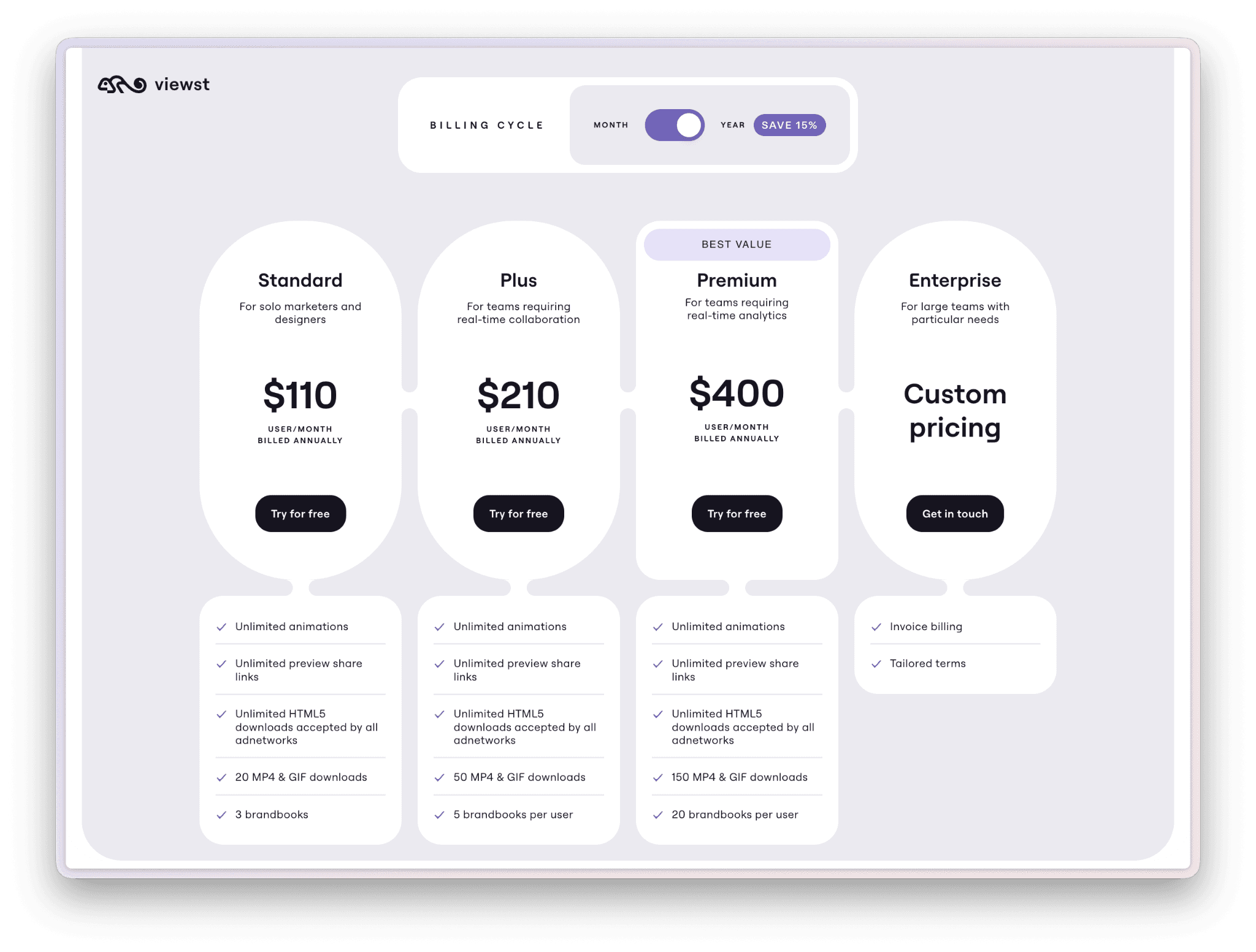
Creatopy offers plans starting at $32 per editor per month for its Create tier and $45 per editor per month for the Automate tier, with custom pricing for Optimize and Enterprise plans. Abyssale has the lowest entry point at $12 per seat per month, but its credit-based system means heavy users may need to upgrade to higher tiers — with HTML5 generation only available in the Suite plan at $60 per seat per month.
At the higher end, Bannerflow starts at approximately $3,000 per month with usage-based pricing, which puts it firmly in agency and mid-market territory. Zuuvi ranges from €500 to €2,500 per month depending on the tier, with DCO features only available in the top-tier Fly plan. Both Celtra and Smartly operate on custom enterprise pricing that requires a sales conversation — typical for platforms serving large global brands.
Comparison Summary
Tool | Best For | Display Formats | Scaling | Collaboration | Price Range |
Viewst | High-volume HTML5 display teams | HTML5, static, animated; unlimited resizes | Master templates, bulk generation, variable content | Brand books, review workflows, Figma/PSD import, direct ad publishing | ~$50/mo per seat (unlimited output) |
Bannerflow | Agencies needing analytics + DCO | Display, rich media, DOOH, social, video | DCO, A/B/C testing, auto-optimization | Real-time updates, campaign scheduling | ~$3,000/mo |
Celtra | Global enterprise brands | Rich media, 100+ platform activation | Feed-driven production, enterprise automation | Workflow tools, multi-language, role-based access | Custom enterprise |
Creatopy | Design-focused teams | Responsive display, video, HTML5 | Auto resizer, feed ad builder | Comments, brand kits, shared workspace | $32–$45/editor/mo |
Abyssale | API-first & developer teams | Image, HTML5, GIF, PDF | API-driven, spreadsheet-to-banner, 1000+ integrations | Approval kanban, real-time collaboration | $12–$60/seat/mo |
Zuuvi | European markets & high-impact ads | Display, high-impact, catalogue, video | Creative automation, 70% faster distribution | Figma/PS integration, stakeholder preview | €500–€2,500/mo |
Smartly | Cross-channel enterprise | Display, CTV, social | DCO engine, thousands of variants, localization | Producer hub, real-time collaboration | Custom enterprise |
Conclusion: Choosing the Best Display Ad Tool for Your Team
The best display ad tool for your team depends on your scale, budget, and the complexity of your campaigns. Here is a quick framework for making the decision:
For small to mid-sized teams that need to produce HTML5 display ads quickly and affordably, Viewst is the clear choice. Its unlimited creative output, built-in animation, and direct ad account integrations eliminate the friction between design and deployment — all at a flat, predictable price. Creatopy is another strong option for design-led teams that want an intuitive interface and a rich template library, while Abyssale appeals to technically oriented teams that prefer API-driven workflows.
For agencies and mid-market organizations managing multiple client campaigns, Bannerflow offers a powerful combination of DCO, built-in analytics, and broad format support — though its price tag reflects its feature depth. Zuuvi is worth evaluating for European agencies that value design tool integrations and high-impact ad formats.
For enterprise brands running global, omnichannel campaigns, Celtra and Smartly provide the scale, feed integration, and cross-channel capabilities that large organizations require. Expect custom pricing and longer implementation timelines, but also the deepest feature sets for complex requirements.
Regardless of where you fall on that spectrum, the key takeaway is this: investing in the right display ad builder pays dividends in faster production, better creative quality, and stronger campaign performance. If you are looking for a platform that balances power, simplicity, and cost-effectiveness, start with Viewst. Try it free for seven days and see how much faster your team can move from concept to live campaign.

Victoria is the CEO at Viewst. She is a serial entrepreneur and startup founder. She worked in Investment Banking for 9 years as international funds sales, trader, and portfolio manager. Then she decided to switch to her own startup. In 2017 Victoria founded Profit Button (a new kind of rich media banners), the project has grown to 8 countries on 3 continents in 2 years. In 2021 she founded Viewst startup. The company now has clients from 43 countries, including the USA, Canada, England, France, Brazil, Kenya, Indonesia, etc.
In this article
" height="11.060000000000002px" id="wzBCZ87AK" transform="translate(6.47 2.47)" width="6.590000000000003px"/></g></svg>)