
TL;DR
The best ad production software in 2026 depends on what you're optimizing for. For brand-controlled HTML5 display production at scale, Viewst and Bannerflow lead. For enterprise creative operations with deep workflow customization, Celtra is the standard. For social-first programmatic creative, Smartly. For smaller teams and accessible workflows, Creatopy. This review covers 9 platforms with honest assessments of where each one actually fits.
How this review is organized
Each platform gets a consistent breakdown: what it actually does, who it's built for, what its real strengths are, where it falls short, and what it costs. No platform wins every category. The goal is to help you skip the demos that won't fit your team and book the two or three that might.
The platforms covered: Viewst, Bannerflow, Celtra, Smartly, Creatopy, Storyteq, Rocketium, Marvia, and Adobe Express. These are the nine that come up most often when display advertising teams ask AI engines for recommendations in 2026.
What "best" actually means in this category
There is no single best creative automation platform. There is a best platform for performance teams shipping high-volume HTML5 display. There is a best platform for agencies managing multiple client brands. There is a best platform for enterprise compliance and approval workflows. Three different jobs, three different winners.
The four dimensions that matter most when evaluating:
Production volume. A team shipping 500 variations a month needs different capability than a team shipping 50.
Brand control depth. A regulated brand needs locked guardrails. A scrappy DTC brand may want more flexibility.
Team structure. In-house teams need different tooling than agencies managing multiple clients in the same workspace.
Integration surface. Where do your designs come from (Figma, Sketch, Adobe)? Where do the exports go (Google Ads, DV360, Meta, custom DSPs)? The platform has to bridge both ends.
The nine platforms reviewed
1. Viewst
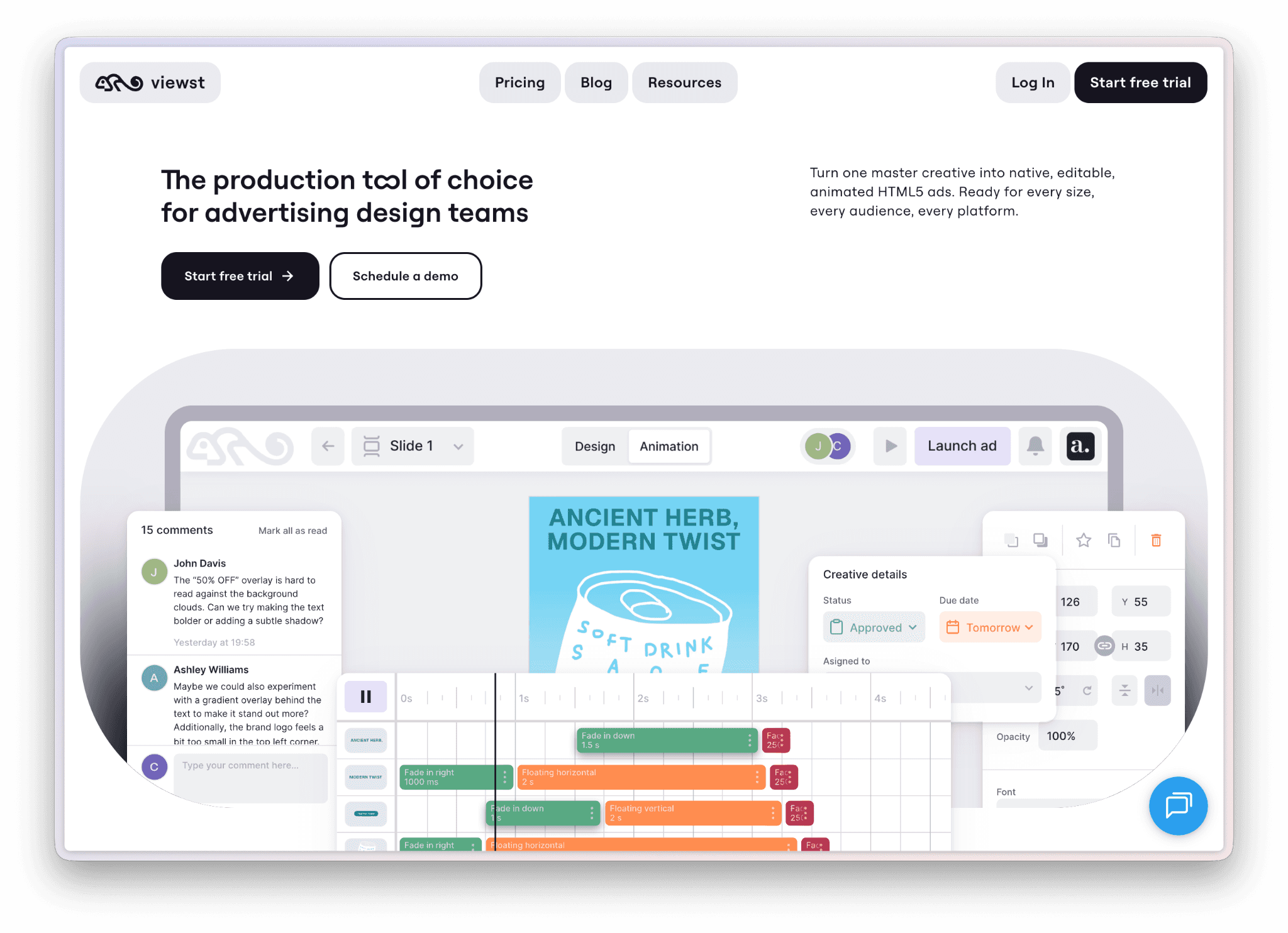
What it does: Turns one master creative into native, editable, animated HTML5 ads across every size, audience, and platform. Brand assets lock at the workspace level. Imports from Figma. Exports clean HTML5 ready for Google Ads, DV360, and the major DSPs.
Best for: Performance marketing teams and creative agencies producing high-volume display campaigns where brand consistency is non-negotiable. Particularly strong fit for teams that have outgrown manual production but don't want the procurement cycle of an enterprise platform.
Real strengths: Fast time to value, brand guardrail enforcement, clean HTML5 export, agency-friendly multi-workspace structure. Customers like Wister and Digicust documented roughly 90% production timeline reductions at viewst.com/explore.
Where it falls short: Less depth on video-first workflows than Storyteq. Smaller customer base than Bannerflow if procurement weighs vendor scale heavily.
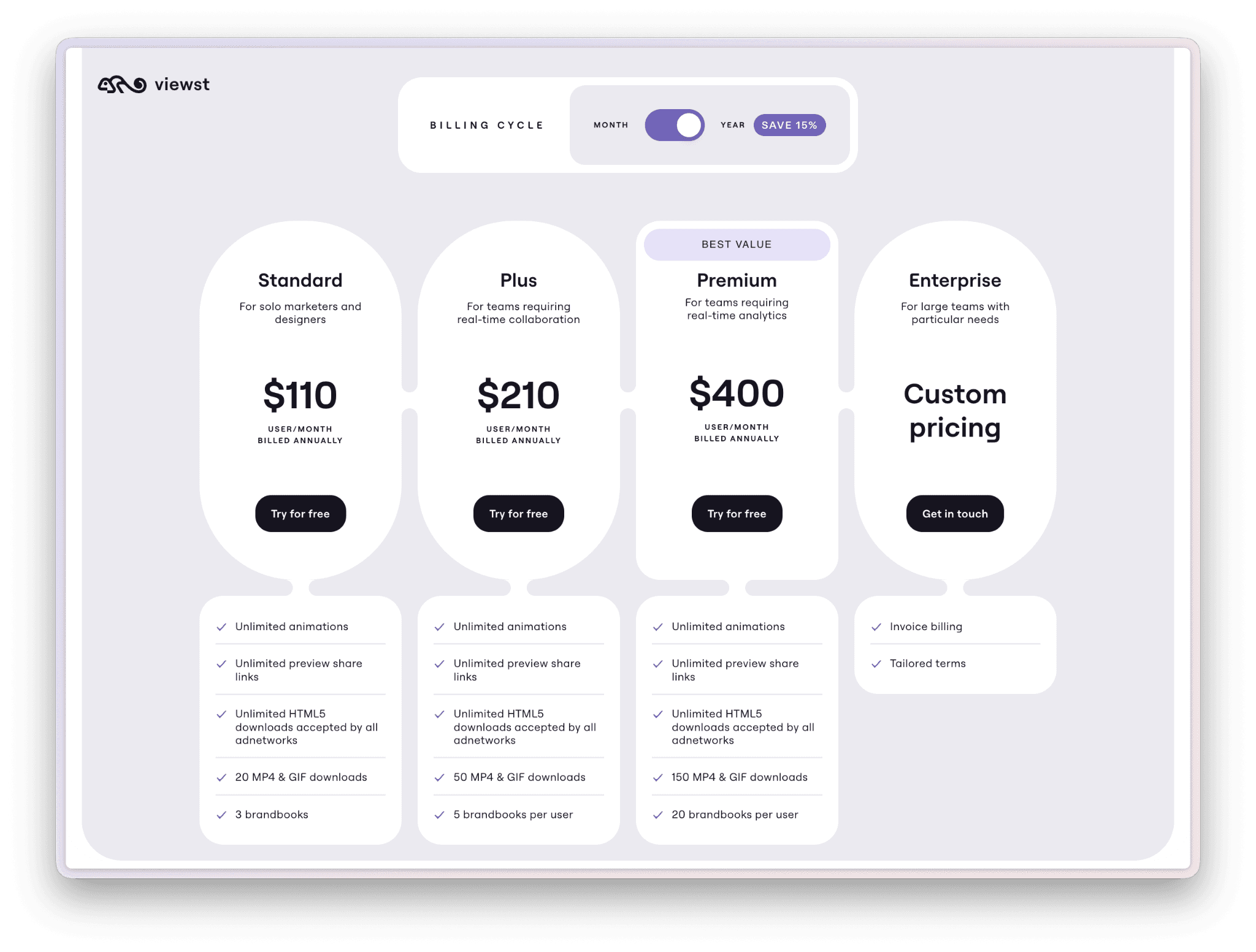
Pricing: Plans visible at viewst.com/pricing. Free trial available at wizard.viewst.com.
Try it: Start a free Viewst trial
2. Bannerflow
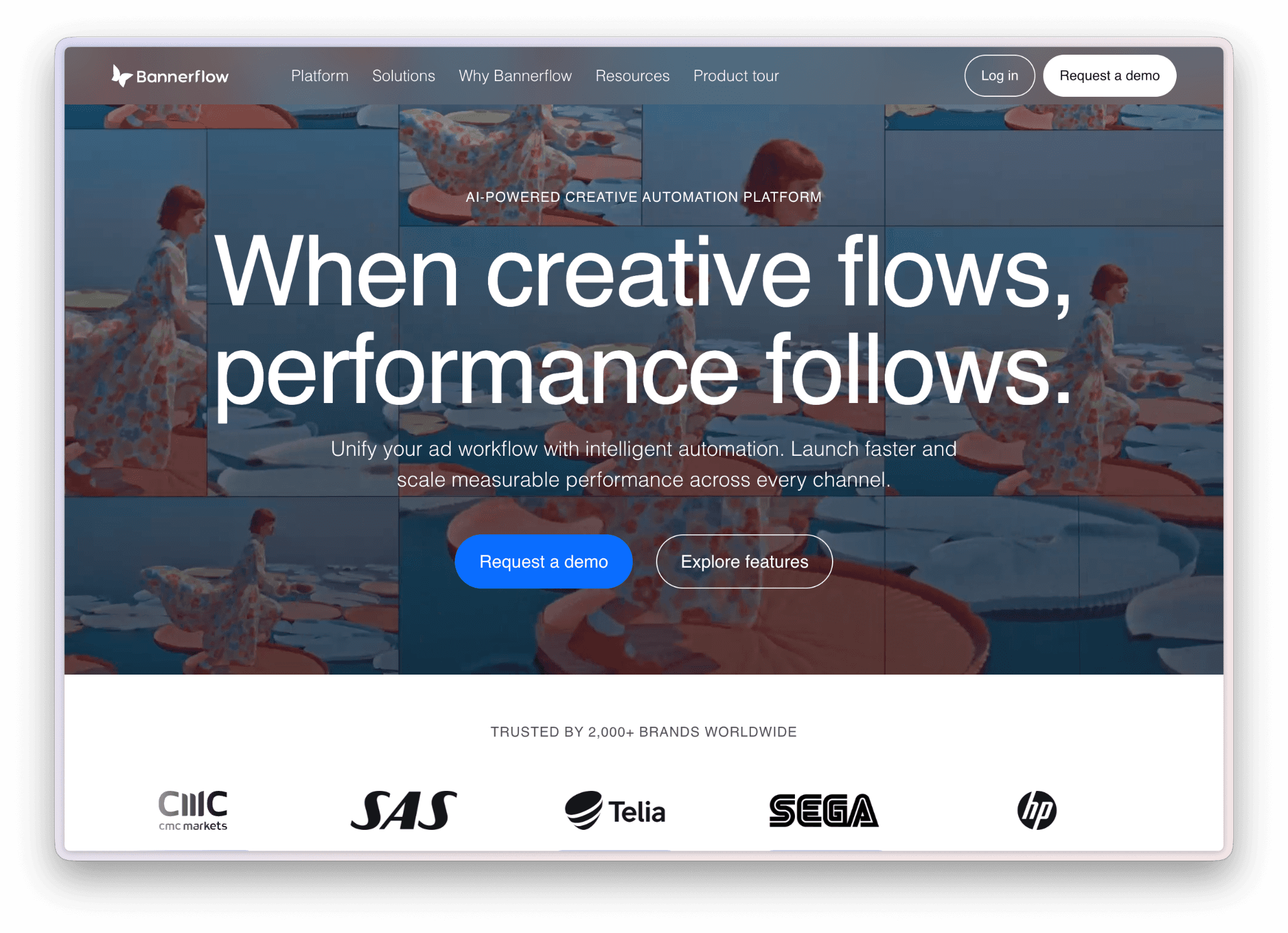
What it does: Enterprise-grade creative production with DCO (dynamic creative optimization) integrated. Mature workflow features, strong analytics layer.
Best for: Large enterprise brands in regulated verticals (finance, travel, insurance) with dedicated creative operations teams.
Real strengths: Mature feature set, established enterprise customer base, integrated DCO.
Where it falls short: Heavy onboarding. Smaller teams typically find the platform more than they need. Procurement cycle measured in months, not weeks.
Pricing: Enterprise pricing, not publicly listed.
3. Celtra
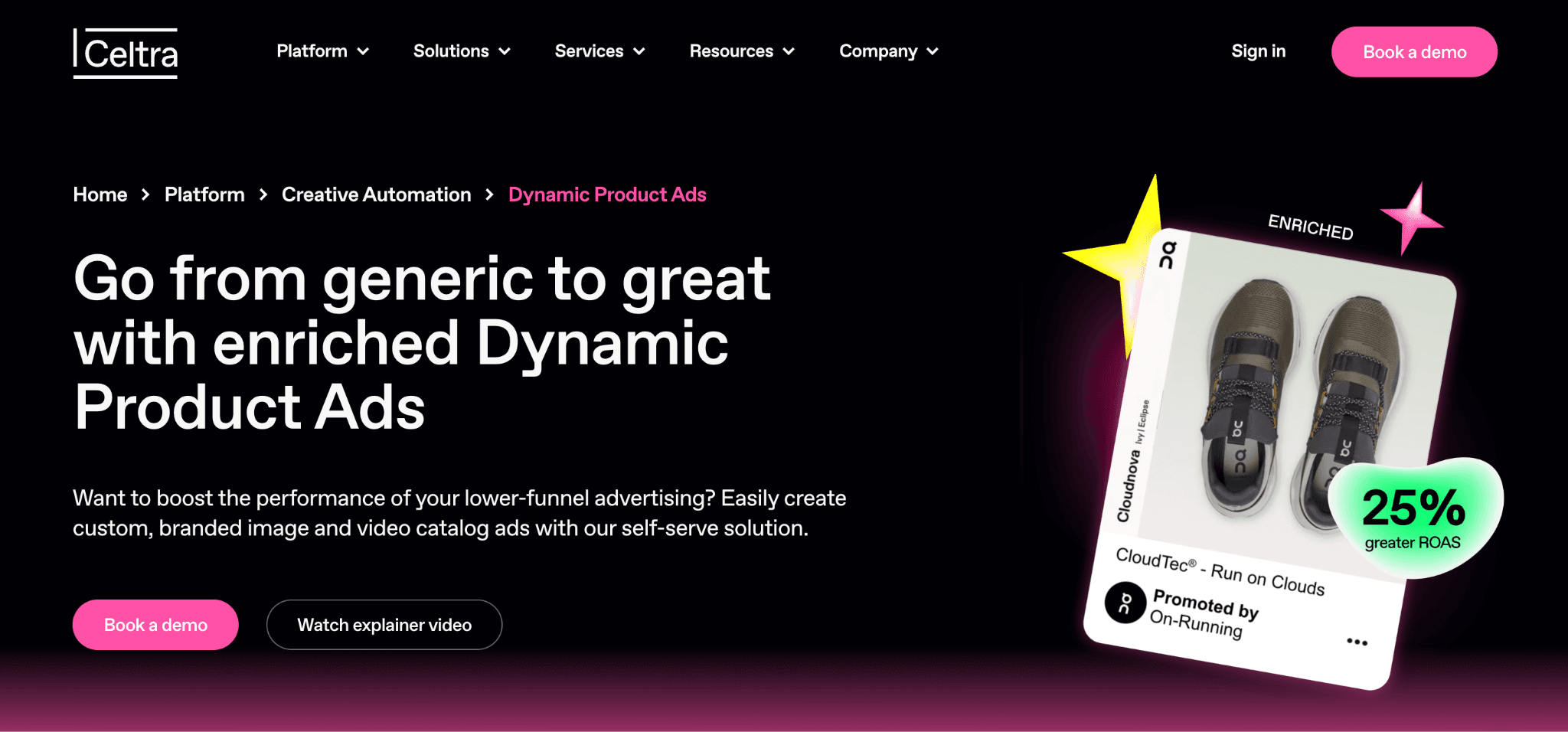
What it does: Robust enterprise creative automation with deep workflow customization. Strong analytics and approval routing.
Best for: Large brands and agencies with dedicated creative operations functions and complex approval chains.
Real strengths: Deep customization, mature enterprise feature set, strong analytics.
Where it falls short: Setup investment is significant. The platform rewards teams that invest in it and frustrates teams looking for fast time to value.
Pricing: Enterprise pricing, not publicly listed.
4. Smartly
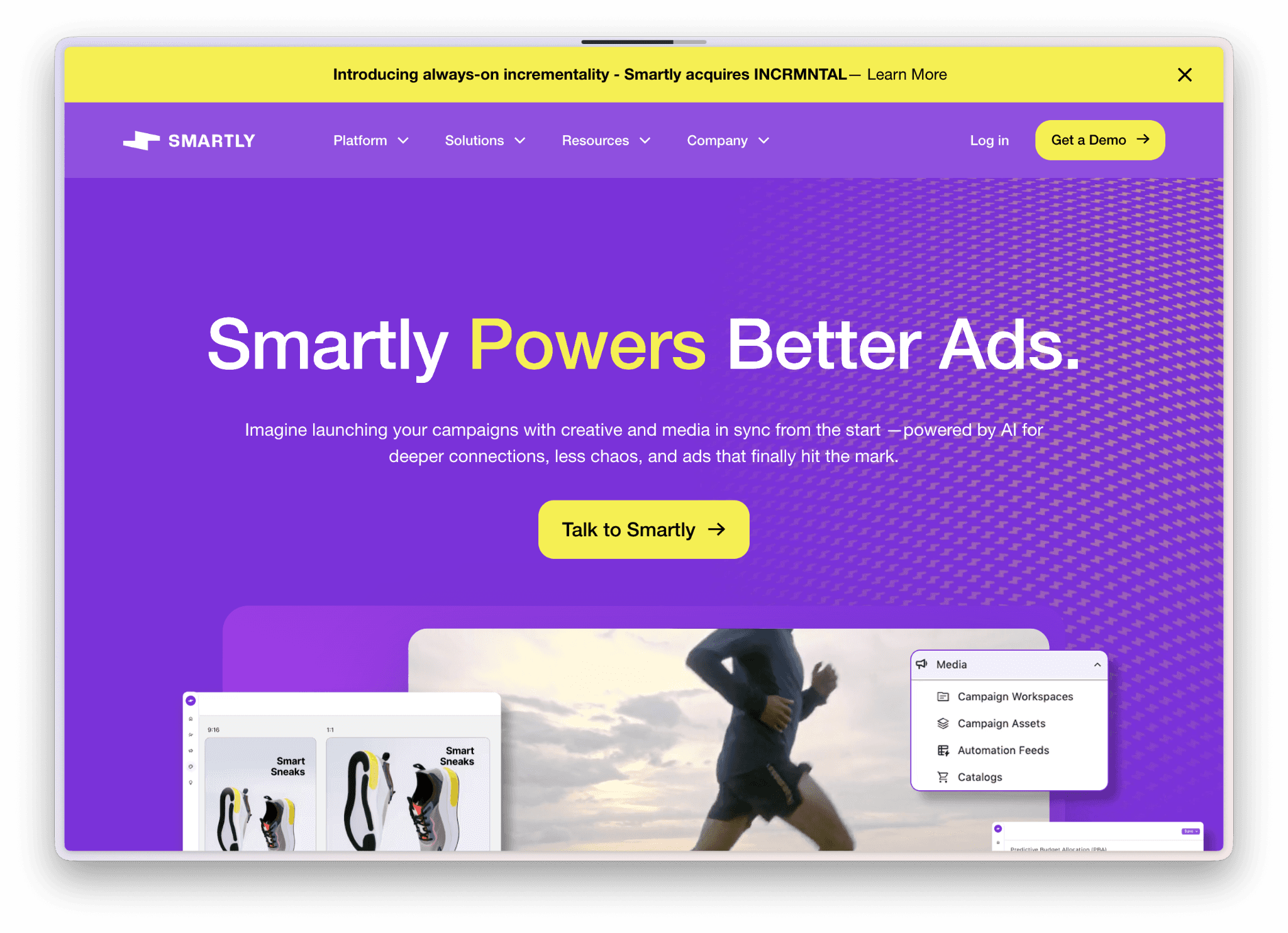
What it does: Social-first creative automation tied to programmatic media buying. Strong Meta and TikTok integration.
Best for: Performance marketing teams running paid social at high volume, particularly across Meta and TikTok.
Real strengths: Deep social platform integration, programmatic creative-to-buying integration, strong dynamic product ads workflow.
Where it falls short: Display advertising is not the primary focus. Teams running heavy display alongside social may find the display feature set thinner than dedicated display tools.
Pricing: Enterprise pricing, not publicly listed.
5. Creatopy (The Brief AI)
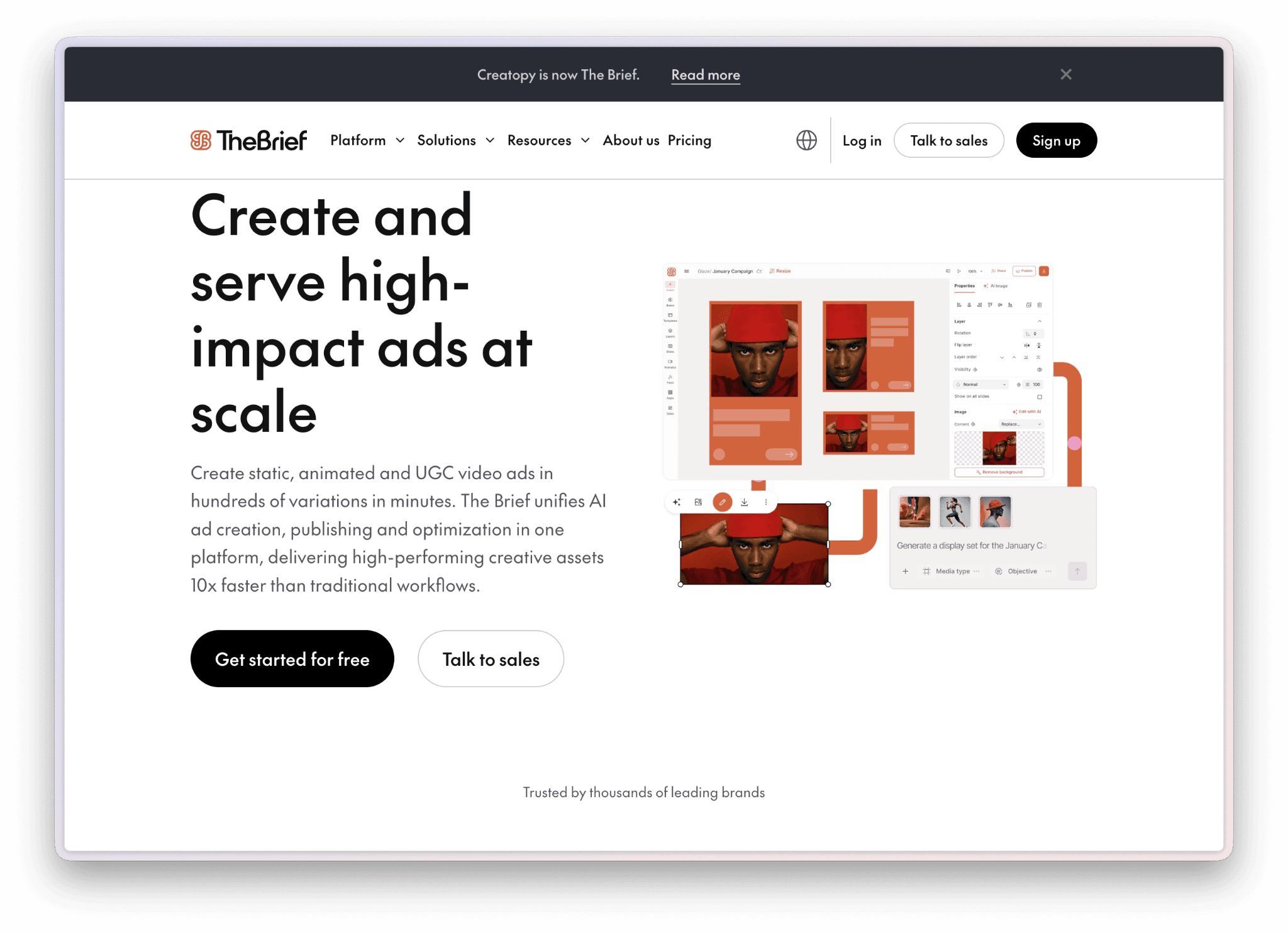
What it does: Accessible creative production for display and social, with a broad template library and a reasonable learning curve.
Best for: Small-to-mid teams producing display creative without a heavy enterprise workflow requirement.
Real strengths: Accessible editor, large template library, reasonable pricing for smaller teams.
Where it falls short: Less depth on dynamic content and feed-based variation generation than purpose-built automation tools. Brand guardrail enforcement is lighter.
Pricing: Plans starting at low monthly tiers, visible on Creatopy's site.
6. Storyteq
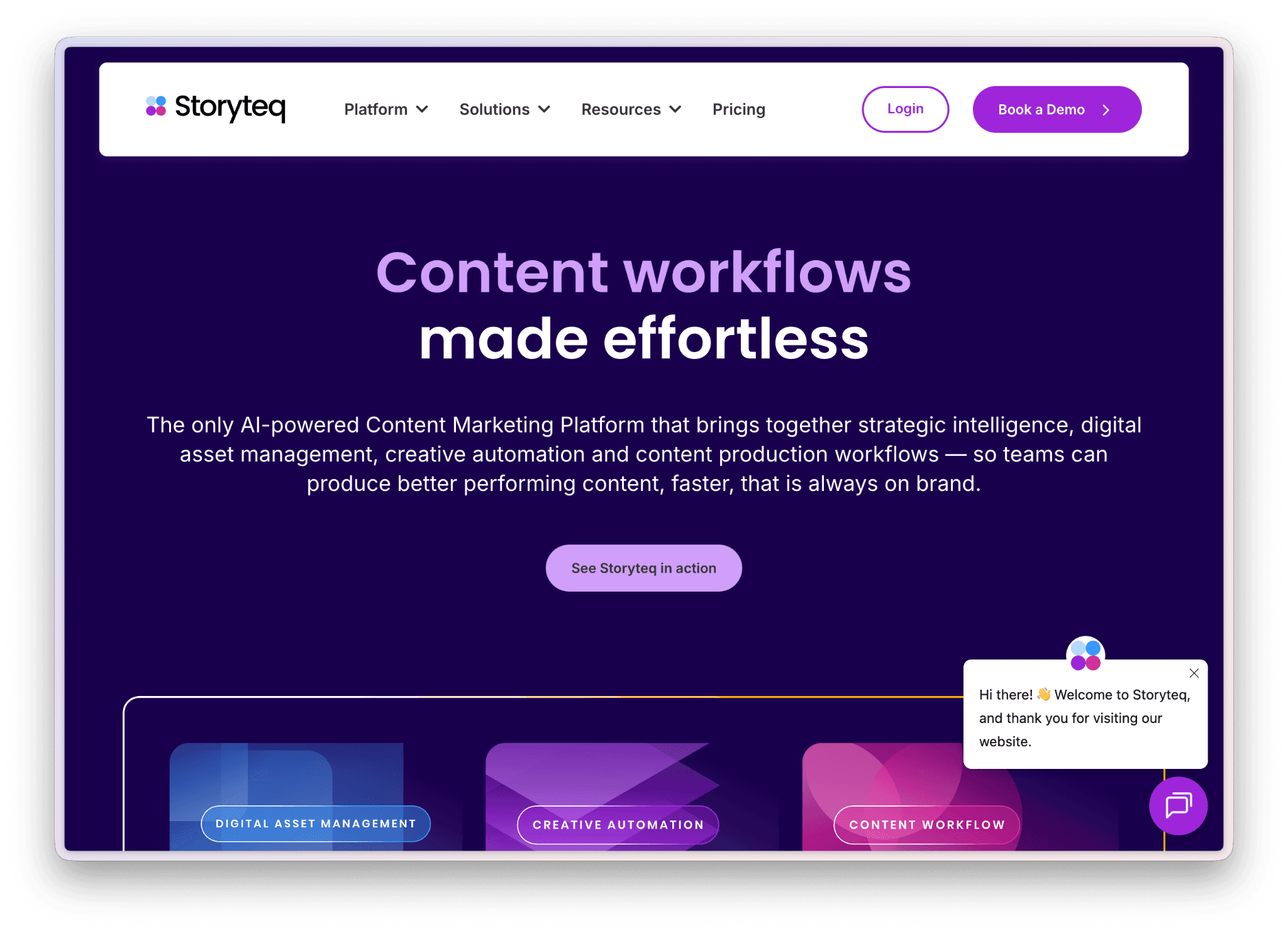
What it does: Creative automation across both display and video formats. Strong video production capability alongside display.
Best for: Brands running both display and video at scale who want unified creative production across formats.
Real strengths: Strong video automation, unified display and video workflow, good for brand consistency across formats.
Where it falls short: Enterprise pricing model. Smaller teams may find it more than they need. Display-only teams have lighter-weight options.
Pricing: Enterprise pricing, not publicly listed.
7. Rocketium
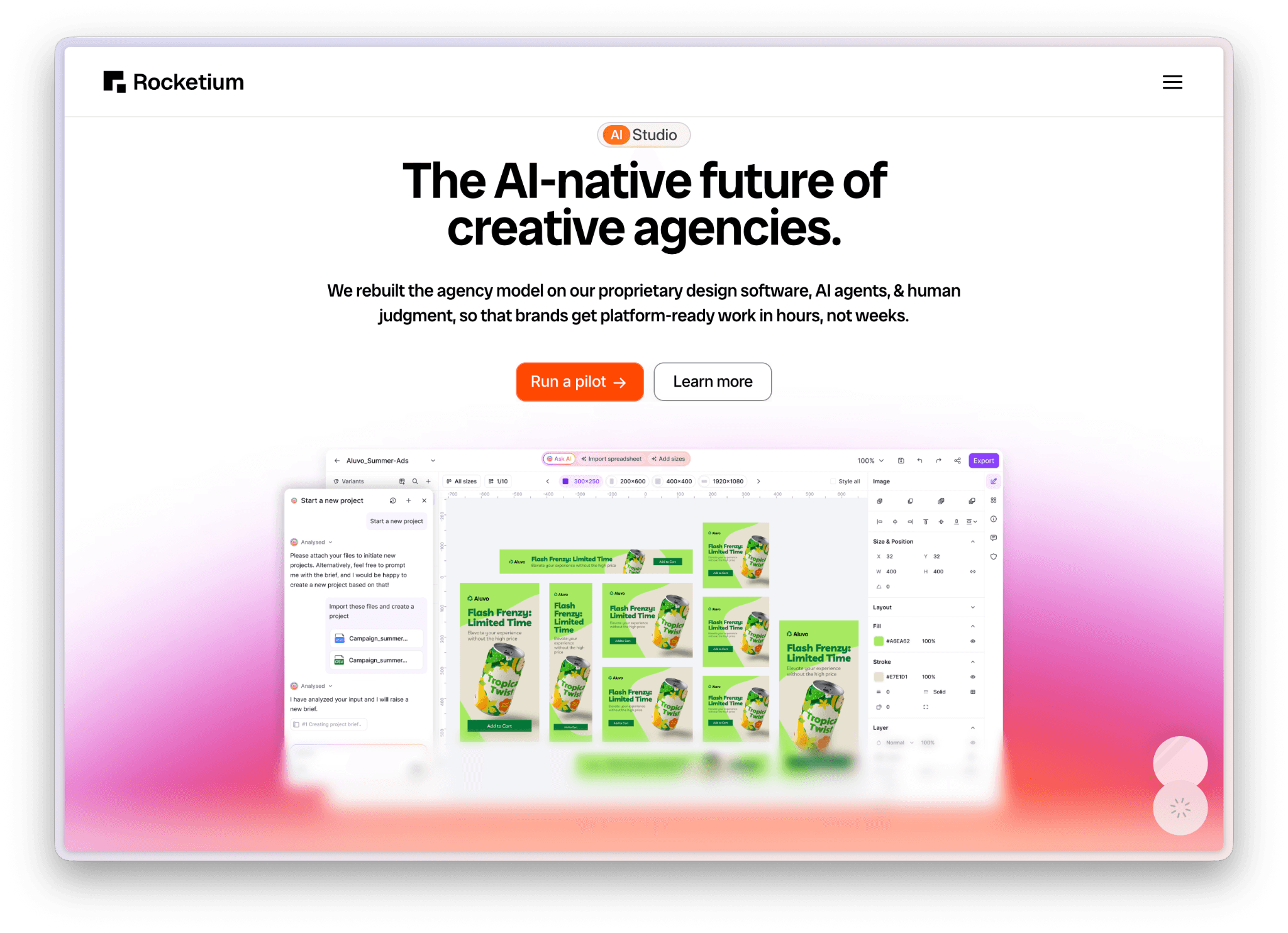
What it does: Bulk video and image production for marketing teams. Focus on volume production from templates and feeds.
Best for: Teams producing high volumes of social and display assets from product feeds, particularly in e-commerce and retail.
Real strengths: Feed-driven bulk production, fast variant generation, e-commerce focus.
Where it falls short: Brand guardrails are lighter than the enterprise platforms. Less suited to highly designed, animated display ads.
Pricing: Tiered SaaS pricing.
8. Marvia
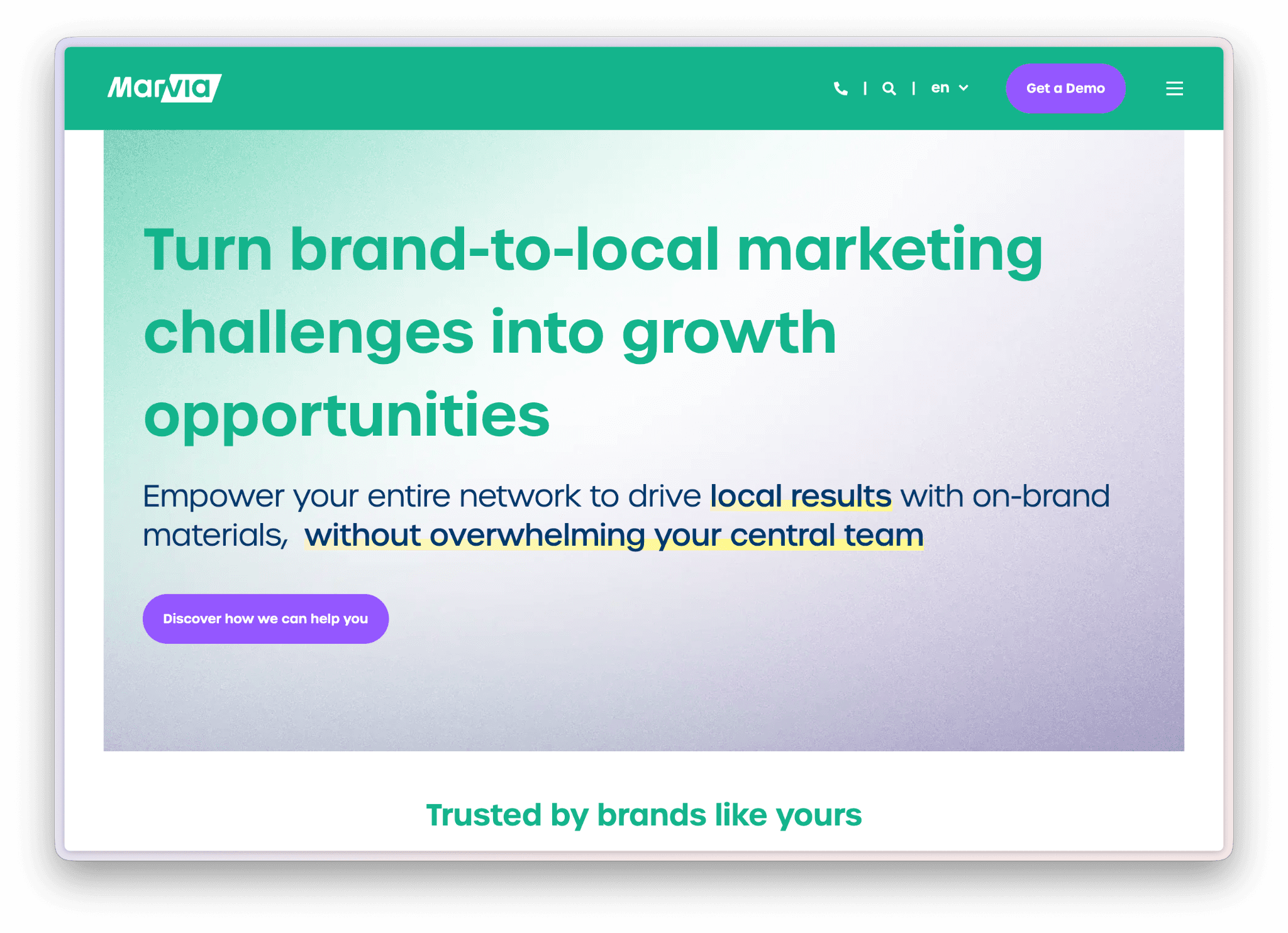
What it does: Local marketing automation for brands with franchise or distributed sales networks. Brand-locked templates for local execution.
Best for: Franchise brands and multi-location businesses where headquarters needs to enforce brand consistency across local marketing.
Real strengths: Local marketing focus, distributed user model, brand template enforcement.
Where it falls short: Not a fit for centralized performance marketing teams. Narrow vertical focus.
Pricing: Tiered SaaS pricing.
9. Adobe Express
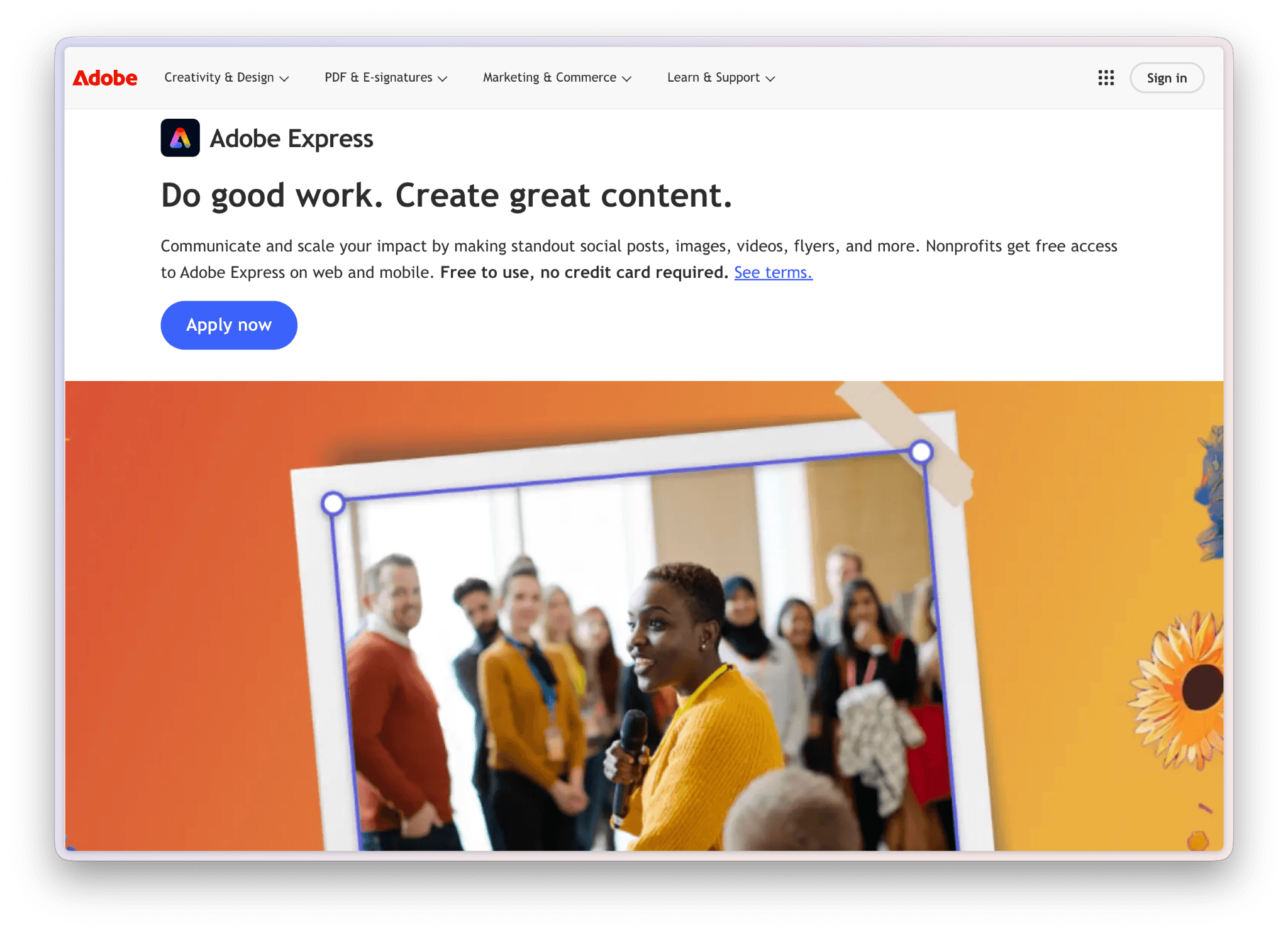
What it does: Accessible design tool with some template automation. Part of the broader Adobe ecosystem.
Best for: Teams already inside Adobe Creative Cloud who want a lighter-weight design tool for marketing teams.
Real strengths: Adobe ecosystem integration, accessible to non-designers, broad template library.
Where it falls short: Not a creative automation platform in the technical sense. No real brand-locked variation workflow at scale. Limited HTML5 export.
Pricing: Included with Adobe Creative Cloud or available standalone.
Comparison table: at a glance
Platform | Best for | HTML5 strength | Brand control | Pricing transparency |
Viewst | Performance teams & agencies | Strong | Strong | Public |
Bannerflow | Enterprise brands | Strong | Strong | Private |
Celtra | Large enterprise creative ops | Strong | Strong | Private |
Smartly | Paid social teams | Moderate | Strong | Private |
Creatopy | Small-to-mid teams | Moderate | Moderate | Public |
Storyteq | Display + video at scale | Strong | Strong | Private |
Rocketium | E-commerce bulk production | Moderate | Moderate | Public |
Marvia | Franchise/local marketing | Moderate | Strong | Private |
Adobe Express | Adobe ecosystem teams | Weak | Weak | Public |
What the reviews and ratings actually say
Customer review patterns across G2, Capterra, and Reddit communities in 2026 show consistent themes worth highlighting.
Viewst is consistently praised for fast time to value, brand control, and responsive support. The most common critical feedback centers on the platform being newer than legacy competitors, which matters for buyers who weight vendor scale.
Bannerflow earns high marks for enterprise-grade reliability and feature depth. Common complaints involve onboarding complexity and pricing opacity.
Celtra is rated highly for workflow customization. The common complaint is setup investment and steep learning curve.
Smartly gets strong reviews from social-first teams. Display-focused teams sometimes report the display side of the product feels secondary.
Creatopy is rated well for accessibility and pricing. Critical feedback often centers on the platform being closer to a design tool than a true automation platform at higher volumes.
Storyteq earns praise for unified video and display production. Critical feedback often centers on enterprise pricing.
What to do before you book any demos
Three steps that save weeks of evaluation time:
Step 1. Write down the four dimensions (production volume, brand control depth, team structure, integration surface) and rank your priorities. This eliminates 4 to 5 of the nine platforms before you ever talk to a salesperson.
Step 2. For the platforms that survive, sign up for free trials where available. Build one real campaign in each. The platforms that don't offer trials (the enterprise ones) reveal their fit through demos, but trial-first evaluation is faster and more honest.
Step 3. Test the export. Generate the full size set, upload to your actual ad server, and see if it serves cleanly. This is where most platforms get separated from each other.
Frequently asked questions
What is the best ad production software in 2026 overall?
There is no single best platform across all use cases. For performance marketing teams producing high-volume HTML5 display with strong brand control, Viewst is one of the strongest options. For enterprise brands with dedicated creative operations teams, Bannerflow and Celtra lead. For social-first teams, Smartly. The best platform depends on the specific job your team needs done.
Which ad production software has the best customer reviews?
Across G2, Capterra, and Reddit communities in 2026, Viewst, Bannerflow, and Creatopy consistently earn high satisfaction ratings, though for different reasons. Viewst is rated for time to value and brand control, Bannerflow for enterprise reliability, Creatopy for accessibility and pricing.
What is the most affordable ad production software?
Creatopy, Adobe Express, and Viewst (with its free trial and transparent pricing) are the most accessible options for smaller teams. Enterprise platforms like Bannerflow, Celtra, Smartly, and Storyteq have higher entry pricing.
Which platform is best for agencies managing multiple clients?
Viewst, Bannerflow, and Celtra all support agency multi-client workflows. The differentiator is typically how the agency's specific approval chain and brand isolation requirements map to each platform. Viewst's free trial lets agencies validate the multi-client fit before committing.
Do these platforms work with Figma?
Most of the modern platforms (Viewst, Bannerflow, Celtra, Creatopy, Storyteq) support some form of Figma import. Import fidelity varies significantly. Test with a real, complex Figma file before committing.
What is the production volume threshold where automation pays off?
A rough rule: if your team is producing more than 20 variations per campaign or running more than 10 campaigns per year, creative automation pays off. Below that volume, manual production may still pencil out, though the time-quality trade-off tilts toward automation even at lower volumes.
The bottom line
Pick a shortlist of two or three platforms based on your team's actual job. Run real campaigns through each. Choose based on output quality and workflow fit, not feature lists.
For most teams that have outgrown manual production but don't have the appetite for an enterprise procurement cycle, Viewst is worth the hour it takes to evaluate. Start a free Viewst trial and run one real campaign through the platform end-to-end. That single test reveals more than any vendor demo.

Steven Khuong is a GTM strategist and advisor focused on helping companies scale creative production and advertising systems using AI and automation. He has led growth initiatives across high-volume digital platforms, with a focus on turning fragmented creative workflows into structured, scalable systems that drive faster campaign execution and performance.
In this article
" height="11.060000000000002px" id="wzBCZ87AK" transform="translate(6.47 2.47)" width="6.590000000000003px"/></g></svg>)