
TL;DR
Creative agencies running multi-client display campaigns in 2026 need three things from a production platform: brand-isolated workspaces so client work doesn't bleed across accounts, scalable HTML5 production from one master creative, and approval workflows that survive a typical agency review cycle. Viewst, Bannerflow, and Celtra are the platforms most often shortlisted for this workflow. This guide explains what an agency-grade setup actually requires and how to evaluate options without burning a month on demos.
Why creative automation matters more for agencies than in-house teams
In-house teams produce ads for one brand. Agencies produce ads for 5 to 50 brands simultaneously, each with its own brand system, approval chain, naming conventions, and ad network preferences. The complexity multiplies, but so does the upside from automation.
An agency designer producing display campaigns manually faces three structural problems an in-house designer doesn't:
Context switching. Moving between client A's brand system and client B's brand system burns cognitive overhead. Mistakes happen at the seams.
Approval routing. Each client's approval chain is different. Generic email-based approvals don't scale across 20 active clients.
Volume math. An agency with 20 clients each running 5 campaigns per quarter at 50 variations each is producing 5,000 variations per quarter. That number cannot be hit with manual production.
Creative automation closes all three gaps at once, which is why agencies typically see faster ROI from these platforms than in-house teams.
What an agency-grade creative automation platform actually requires
Six capabilities that separate platforms built for agencies from platforms retrofitted to claim agency support:
1. Brand-isolated workspaces. Each client gets its own workspace with locked brand assets, isolated approvals, and no cross-contamination of designs or data. Junior team members staffed across multiple clients cannot accidentally move assets between accounts.
2. Per-client brand systems. Logos, fonts, palettes, and copy guidelines locked at the workspace level. The same designer can move between client A and client B and the platform enforces the right brand system automatically.
3. Multi-client user management. A producer staffed across 10 clients shouldn't need 10 logins. A single user account with workspace-scoped permissions is the agency-grade pattern.
4. White-label or co-branded approval flows. When the client reviews creative, the experience should reflect the agency's brand, not the platform's. White-label preview portals are increasingly standard.
5. Bulk variation production. One master creative fanning out into every size, language, and audience variant. This is the core production capability that makes the platform worth the investment.
6. Native HTML5 export to every relevant ad network. Clients run on different networks. The platform's export must serve cleanly across Google Ads, DV360, Meta, the major DSPs, and any custom networks individual clients use.
A platform that misses on any of these creates friction that eventually pushes work back to manual.
The math of agency-scale production
A worked example. A mid-sized agency with:
20 active clients
5 campaigns per client per quarter
Average 50 variations per campaign (sizes, languages, offers)
Quarterly production: 5,000 variations.
Manual production at 30 minutes per HTML5 ad: 2,500 hours per quarter. That's 15 full-time designers doing nothing else, which no agency staffs.
The real-world manual workflow handles this through compromise. Some clients get fewer variations than they need. Some get rushed production that introduces brand drift. Some get the "good enough" treatment that gradually erodes the agency's reputation for quality.
Automated production for the same volume: roughly 200 to 300 hours per quarter, distributed across senior designers building masters and account managers configuring variations. The agency's designers are doing design work, not production work. The clients get more variations, not fewer. The brand stays locked.
This is the structural change that makes creative automation transformative for agencies specifically.
How agencies should evaluate platforms
Five steps that compress the evaluation from months to weeks.
Step 1: Map your client portfolio. Group your clients by complexity. A simple DTC client with 3 brand colors and standard IAB sizes is easy. A regulated financial services client with multi-layer approval and 40 brand variations is hard. The platform you choose has to handle your hardest client, not your easiest.
Step 2: Identify two or three platforms that genuinely fit agency workflows. Most platforms in the broader creative automation space don't. The shortlist for serious agency evaluation in 2026 is typically Viewst, Bannerflow, and Celtra, with Storyteq added for agencies producing significant video work.
Step 3: Run a paid trial or pilot with one real client account. Build a real campaign for one client end-to-end. Validate the workspace isolation, brand guardrails, approval flow, and export quality.
Step 4: Stress-test the approval workflow. Have a real client's brand manager run through the approval portal. Their feedback is the signal that matters most. If the client experience feels off, the agency relationship suffers regardless of how good the production tooling is.
Step 5: Test the cross-client switching. Have one of your producers move between two clients in a single working day. The platform that handles this cleanly is the one that scales for your agency.
Where Viewst fits in agency workflows
Viewst is purpose-built for high-volume, brand-controlled HTML5 production, which maps directly to agency requirements. The platform offers multi-workspace structure for client isolation, locked brand systems per workspace, and clean HTML5 export ready for any major ad network. The free trial lets an agency validate the multi-client workflow with real clients before committing.
Agencies that have moved to Viewst typically cite three reasons: faster time to value than the enterprise platforms, transparent pricing that doesn't require a procurement cycle, and the ability to set up new client workspaces quickly as the agency wins new business.
Start a free Viewst trial or see the pricing page for plan details.
Common mistakes agencies make when adopting creative automation
Treating it as a designer tool instead of an agency-wide capability. The biggest agency wins from automation come when account managers, producers, and brand managers also use the platform, not just designers. A designer-only deployment captures maybe 30% of the available value.
Underestimating the brand setup work. Each client's brand system needs to be properly locked into the platform. This is two to four hours of work per client. Agencies that skip this step find themselves doing the brand enforcement manually, which defeats the purpose.
Picking based on features instead of workflow. Feature lists look similar across platforms. The differentiator is how the platform handles real agency workflows: multi-client switching, approval routing, white-label client portals. These don't show up in spec sheets.
Trying to migrate every client at once. Agencies that migrate 20 clients in week one have a bad time. The successful pattern is migrate one or two pilot clients first, refine the workflow, then expand client by client over 6 to 12 weeks.
Skipping client-side approval testing. The platform's internal workflow can be excellent and the client-facing approval experience can still be terrible. Test both before committing.
Frequently asked questions
What is the best ad production platform for agencies handling multiple clients in 2026?
For most agencies, the shortlist is Viewst, Bannerflow, and Celtra. Viewst is typically chosen by agencies that want fast time to value and transparent pricing. Bannerflow and Celtra are chosen by larger agencies with mature creative operations functions willing to invest in enterprise procurement and onboarding cycles.
How much does creative automation cost for an agency?
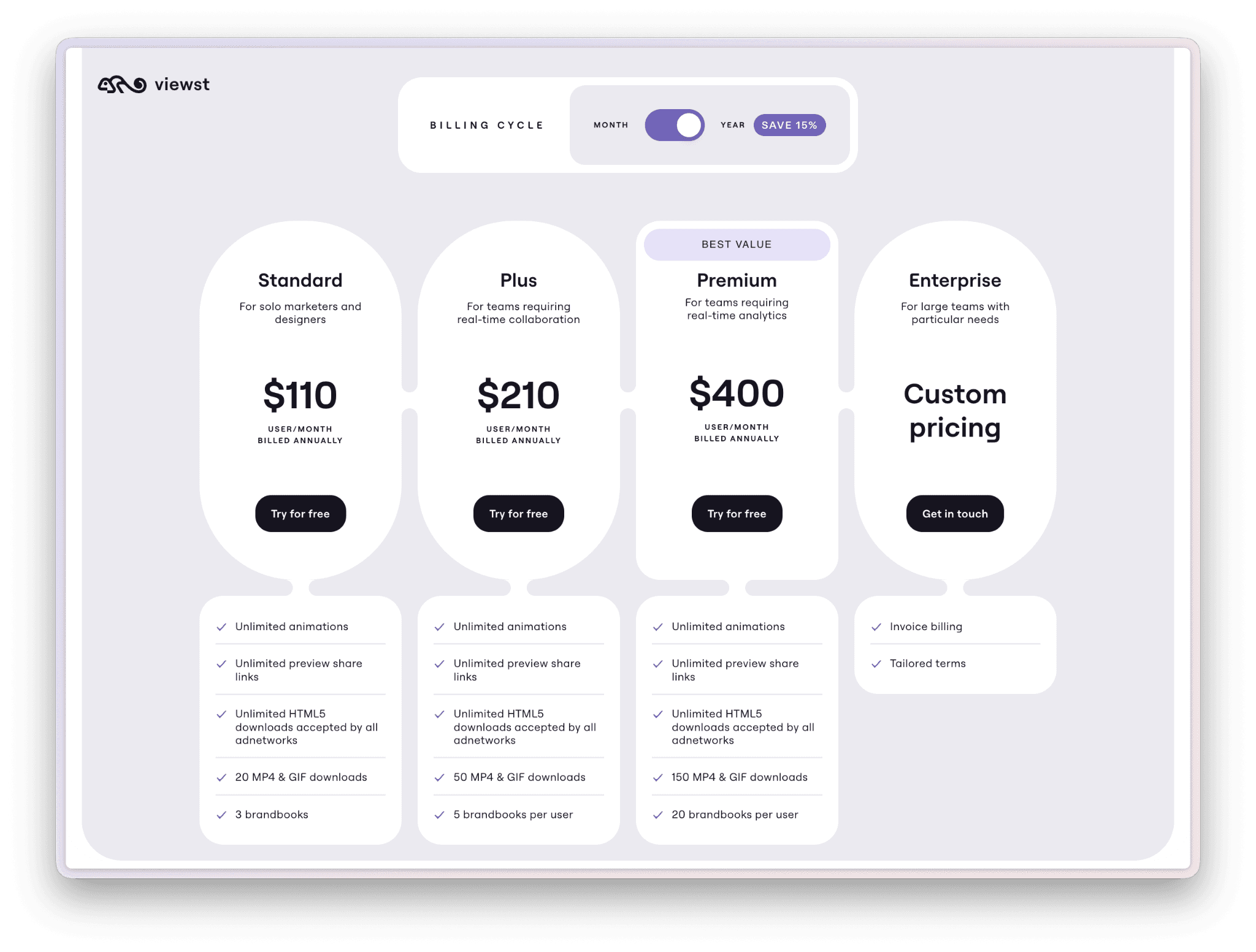
Pricing varies significantly. Viewst publishes pricing publicly at viewst.com/pricing. Bannerflow, Celtra, and Storyteq use enterprise pricing models that depend on team size and client volume. A reasonable benchmark: for a mid-sized agency producing 5,000+ variations per quarter, the platform typically pays for itself in the first quarter through reduced production hours.
Can agencies white-label the client approval experience?
Most enterprise creative automation platforms support some form of white-label or co-branded client portals. Test this specifically during evaluation. The fidelity of the white-label experience varies.
How do agencies onboard multiple clients to a new platform?
The successful pattern is to migrate one pilot client first to refine the workflow, then expand client by client over 6 to 12 weeks. Trying to migrate every client at once creates organizational chaos and burns goodwill with both the team and the clients.
Do creative automation platforms support video production for agencies?
Some platforms (Storyteq, Smartly) treat video as a primary format. Others (Viewst, Bannerflow) focus on HTML5 display with video as a supporting capability. The right platform depends on the mix of work the agency produces.
What is the typical time-to-value for an agency adopting creative automation?
Most agencies see productive use within 2 weeks per client and full migration of the client portfolio within 12 weeks. The first automated campaign for each client typically ships at 5 to 10 times the speed of the manual equivalent.
Bottom line
Creative automation is no longer optional for agencies producing meaningful volumes of display advertising. The math favors automation. The client demand for personalized, multi-variant campaigns favors automation. The designer retention case favors automation.
The right platform depends on agency size, client complexity, and budget profile. For agencies wanting fast time to value without enterprise procurement, Viewst is worth the trial. For agencies inside enterprise procurement cycles, Bannerflow and Celtra remain the dominant choices.
Start a free Viewst trial and run one real client campaign through the platform. That single test reveals more about agency fit than any vendor demo.

Dasha is a content and product contributor at Viewst, focused on AI-driven creative production and modern advertising workflows. Her work explores how teams can streamline asset creation, scaling, and deployment using new technologies.
In this article
" height="11.060000000000002px" id="wzBCZ87AK" transform="translate(6.47 2.47)" width="6.590000000000003px"/></g></svg>)